The Mechanics of Literary Rebellion
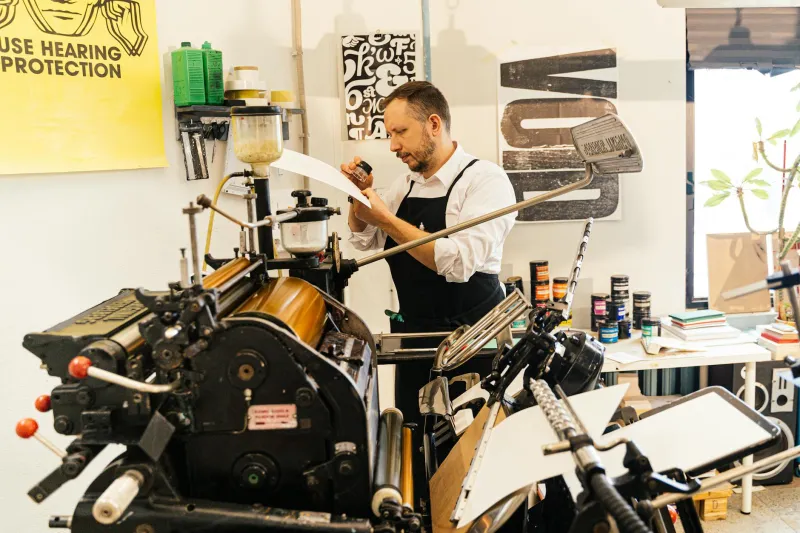
In the narrow closes branching from Edinburgh's Royal Mile, the rhythmic clatter of printing presses once provided the soundtrack to Scotland's intellectual awakening. Between the 16th and 19th centuries, this ancient thoroughfare and its surrounding wynds became the beating heart of a publishing revolution that would transform not just Scotland, but the entire British literary landscape.
The concentration of printers, booksellers, and publishers in Edinburgh was no accident of geography. The city's unique position as both Scotland's legal capital and the seat of the Kirk created an insatiable demand for legal documents, religious texts, and scholarly works. What began as necessity evolved into something far more ambitious: a systematic challenge to London's monopoly on the written word.
The Democratisation of Knowledge
Walk down the High Street today, and you're treading the same stones where Allan Ramsay established his pioneering circulating library in 1725. His shop, positioned strategically near the Luckenbooths, represented more than mere commerce—it was a radical experiment in making literature accessible to Edinburgh's growing middle classes.
The real revolution, however, came with the emergence of what locals called the "penny press." Publishers like Archibald Constable and William Blackwood understood that Scotland's increasingly literate population—bolstered by the Kirk's emphasis on education—represented an untapped market for affordable books and periodicals.
Constable's three-volume novels, priced at a guinea and a half, may seem expensive by today's standards, but they were revolutionary for their time. More importantly, his decision to pay authors substantial sums—£700 for a single work by Sir Walter Scott—established Edinburgh as a city where writers could make a living from their craft.
The Geography of Genius
The physical layout of Edinburgh's Old Town created perfect conditions for this literary ecosystem. Publishers clustered around Parliament Square, where they could easily access the legal community's steady demand for professional texts. Printers established workshops in the closes running down to the Cowgate, where rents were cheaper and the noise of machinery less likely to disturb genteel neighbours.
Blackwood's Magazine, launched from a shop at 17 Princes Street in 1817, became the voice of Tory Scotland and a launching pad for literary careers. The magazine's offices served as an informal salon where writers, critics, and intellectuals gathered to debate the issues of the day. These weren't merely business premises—they were the crucibles where Scottish literary culture was forged.
Surviving Witnesses to Literary History
Remarkably, traces of this publishing heritage remain visible throughout Edinburgh today. Deacon's House Café on Brodie's Close occupies a building that once housed the Incorporation of Wrights and Masons, whose members included many of the city's early printers and bookbinders.
The narrow entrance to Advocate's Close still bears witness to the lawyers and writers who frequented the area's numerous printing houses. Here, in workshops no larger than modern sitting rooms, compositors set type by candlelight, creating the books that would carry Scottish ideas across the globe.
The Burns Connection
Perhaps no single figure better illustrates Edinburgh's role as a publishing powerhouse than Robert Burns. When the Ayrshire poet arrived in the capital in 1786, he found a city already primed for literary celebrity. William Creech, operating from his shop in the High Street, recognised the commercial potential of Burns's work and orchestrated what was arguably Britain's first literary marketing campaign.
The Edinburgh edition of Burns's poems, published in 1787, sold 2,800 copies within months—an extraordinary figure for the period. More significantly, the profits allowed Burns to purchase a farm and establish himself as Scotland's national poet. The narrow closes where these negotiations took place witnessed the birth of modern literary celebrity.
Legacy in Stone and Story
Today's visitors to Edinburgh encounter a city where the publishing revolution's legacy remains embedded in the urban fabric. The Writers' Museum in Lady Stair's Close occupies a 17th-century house that witnessed the height of the city's literary prominence. Nearby, the ornate Victorian façades of Princes Street conceal the sites where Scotland's publishing giants once held court.
The Royal Mile's transformation from a street of printers to a tourist thoroughfare represents more than mere economic evolution—it reflects the globalisation of the literary culture that Edinburgh's ink-stained entrepreneurs first unleashed. The words that once emerged from these narrow wynds continue to shape how the world understands Scotland, ensuring that Edinburgh's greatest export remains not whisky or textiles, but ideas themselves.
In walking these ancient streets, modern visitors follow in the footsteps of the compositors, editors, and publishers who democratised knowledge and made Edinburgh synonymous with literary excellence. The printing presses may have fallen silent, but their revolutionary legacy echoes through every bookshop, library, and reading room in Scotland's enduring capital of letters.