The Democracy of Decoration
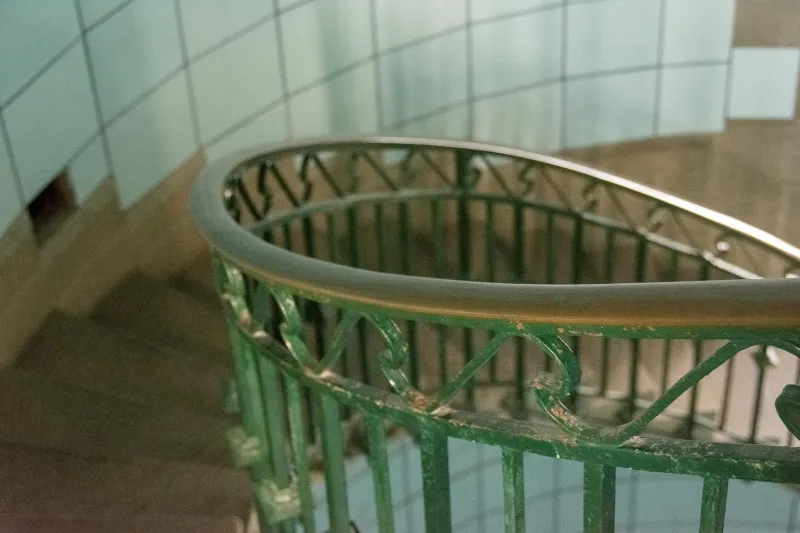
Within Edinburgh's forest of tenement buildings lies a hidden realm of artistic expression that few visitors ever glimpse. Behind every weathered sandstone entrance, beyond the heavy timber doors that guard Edinburgh's residential closes, spiral staircases ascend through layers of forgotten artistry. These common stairs, shared by dozens of families stacked six storeys high, became canvases for a uniquely Scottish form of community art—painted walls, decorative tiles, and ornate ironwork that transformed utilitarian spaces into galleries of working-class aspiration.
Unlike the grand public buildings that dominate Edinburgh's tourist trails, these intimate spaces reveal how ordinary citizens expressed their civic pride and artistic sensibilities. Every painted border, every carefully chosen tile pattern, every polished brass nameplate represents a small act of rebellion against the notion that beauty belonged only to the wealthy. In Edinburgh's tenement stairs, democracy found its most literal expression—shared spaces where individual creativity served collective benefit.
A Walking Guide to Edinburgh's Vertical Galleries
Leith: Maritime Motifs and Merchant Ambitions
Begin your exploration in Leith, where the tenements closest to the docks display the most elaborate stair decorations. Constitution Street, built during the 1890s building boom, contains some of Edinburgh's finest examples of tenement stair art. Number 47 retains its original William Morris-inspired wallpaper in the ground floor lobby, whilst the ascending stairs feature hand-painted nautical motifs—anchors, rope patterns, and stylised waves that reflect the neighbourhood's maritime character.
The tenements along Bernard Street showcase a different aesthetic entirely. Here, successful merchants and ship-owners commissioned elaborate tile work from local pottery firms. The entrance to number 23 features an intact Victorian tile scheme depicting Edinburgh Castle surrounded by thistles and roses—a patriotic display that cost the equivalent of several months' rent for a working family. The brass nameplate holders, still bearing the patina of century-old polish, speak to the pride residents took in their shared spaces.
 Photo: Edinburgh Castle, via www.shutterstock.com
Walk up the stairs of any Bernard Street tenement and notice how the decoration evolves with altitude. Ground floor lobbies display the most elaborate artwork—stained glass panels, mosaic floors, painted ceilings. As you climb higher, decoration becomes simpler but no less thoughtful: painted dados in muted colours, simple geometric patterns, carefully maintained woodwork that gleams despite its age.
Stockbridge: Bohemian Brushstrokes and Artistic Rebellion
Cross the Water of Leith into Stockbridge, where Edinburgh's artistic community has left its mark on tenement stairs for over a century. The area's reputation as a bohemian quarter extends beyond its famous residents to the very fabric of its buildings. Saxe-Coburg Street contains several tenements where artist residents decorated common areas as collaborative projects.
Number 12 Saxe-Coburg Street preserves an extraordinary example of community art from the 1920s. Local art students, many attending Edinburgh College of Art nearby, painted a continuous mural that spirals up the central stairwell. The work depicts scenes from Edinburgh's history—Mary Queen of Scots at Holyrood, John Knox preaching, Burke and Hare in their grisly trade—executed with surprising sophistication given its amateur origins.
The neighbouring streets of St. Stephen Street and Circus Place reveal different approaches to stair decoration. Here, individual households contributed specific elements to collective schemes: one family might donate decorative tiles for a landing, another might fund the painting of a stair rail, whilst a third might commission stained glass for a landing window. These collaborative efforts created visual symphonies that reflected the democratic ideals of their creators.
The Southside: Academic Aspirations and Scholarly Symbolism
South of the Royal Mile, in the shadow of Edinburgh University, tenement stairs display the influence of the city's academic community. The streets radiating from George Square—Buccleuch Place, Teviot Place, Forrest Road—contain tenements where professors, students, and the tradesmen who served them created uniquely intellectual forms of stair art.
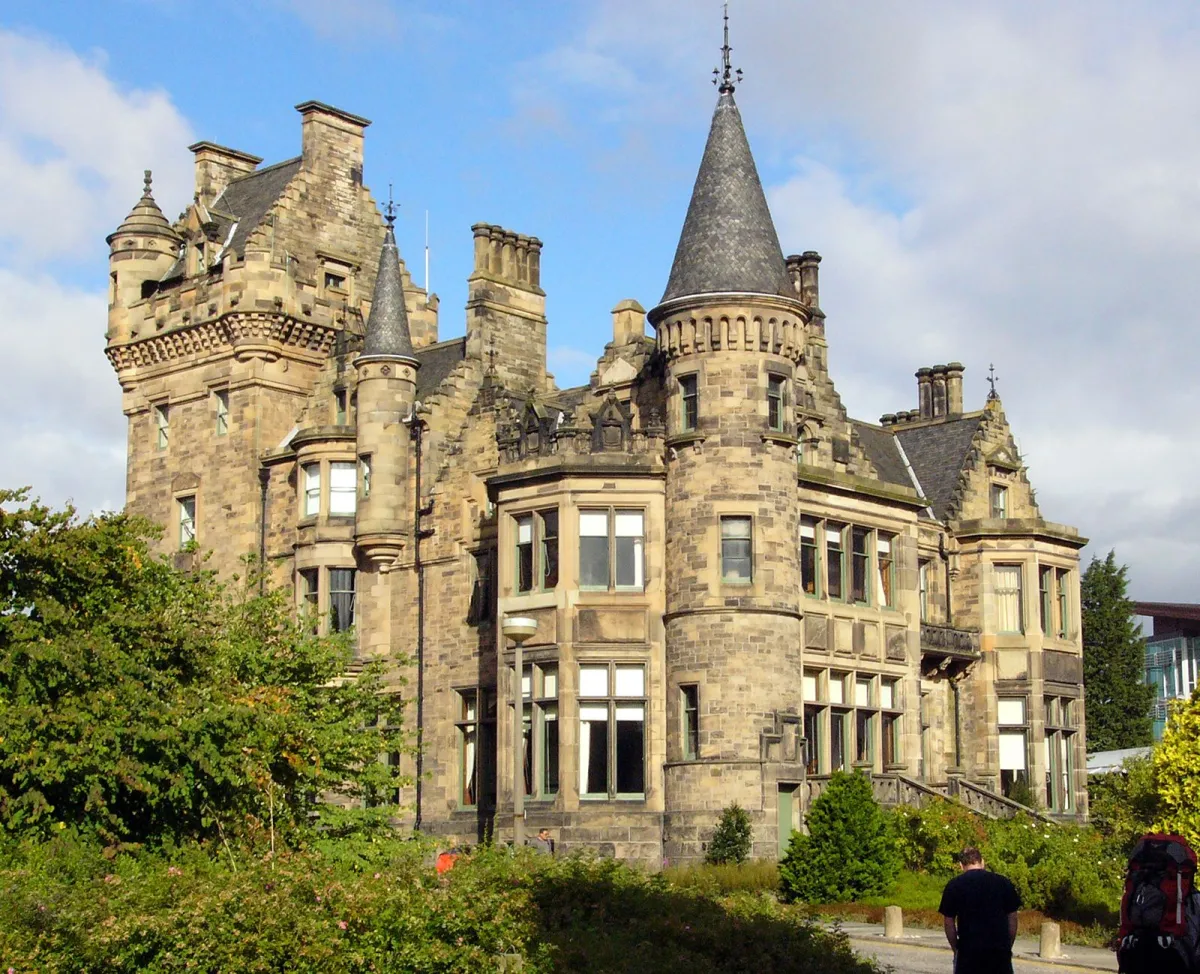 Photo: Edinburgh University, via cdn.britannica.com
The tenement at 15 Buccleuch Place features painted Latin inscriptions along its stair risers—classical quotations chosen by resident academics but executed by local decorators who may not have understood their meaning. The visual effect creates an unexpected marriage of high learning and folk art, where scholarly pretension meets working-class craftsmanship.
Chambers Street's tenements showcase another fascinating phenomenon: stairs decorated with scientific motifs reflecting the influence of nearby museums and laboratories. Geometric patterns based on crystalline structures, painted botanical specimens, and even anatomical diagrams (discretely placed on upper floors) reveal how Edinburgh's reputation for learning influenced domestic decoration.
The Artisans Behind the Art
The creation of Edinburgh's tenement stair art involved a network of skilled craftsmen whose names rarely appear in official records. Local painters, tilers, and decorators developed specialisations in residential work, building reputations within specific neighbourhoods. The Sinclair family of decorators, active in Leith from the 1880s to the 1950s, left their subtle signature in dozens of tenement stairs—a small painted thistle hidden within larger decorative schemes.
These craftsmen worked within tight budgets but displayed remarkable ingenuity in creating impressive effects from simple materials. Painted wood graining mimicked expensive hardwoods, whilst stencilled patterns replicated costly wallpapers. The skill required to execute these deceptions whilst maintaining artistic integrity represents a sophisticated understanding of both technique and aesthetics.
Social Hierarchies in Paint and Tile
The decoration of tenement stairs reflected and reinforced social hierarchies within these vertical communities. Ground floor areas, visible to all visitors, received the most elaborate treatment. Upper floors, inhabited by families of lower economic status, featured simpler but equally thoughtful decoration. This vertical stratification created visual narratives of aspiration and achievement that residents encountered daily.
Yet the democratic nature of these shared spaces also challenged traditional class distinctions. A prosperous merchant's elaborate ground floor entrance might be followed by equally beautiful, if simpler, decoration funded by working families above. These juxtapositions created uniquely Scottish expressions of social democracy, where individual achievement served collective beauty.
Preservation and Rediscovery
Today, Edinburgh's tenement stair art faces twin threats from modernisation and neglect. Many buildings have been converted to offices or hotels, with original decorations painted over or removed entirely. Yet growing awareness of this hidden heritage has inspired conservation efforts across the city.
The Cockburn Association, Edinburgh's civic trust, now maintains a register of significant stair decorations, whilst local history groups organise periodic "open stair" events where residents share their buildings' artistic treasures with neighbours and visitors. These initiatives reveal how much hidden beauty remains within Edinburgh's residential heart, waiting for recognition and protection.
Walking Among the Hidden Galleries
To explore Edinburgh's tenement stair art respectfully, remember that these are private residential buildings. Many residents welcome polite interest in their building's history, particularly if approached during daylight hours with genuine curiosity rather than intrusive photography. The reward for respectful exploration is access to an artistic tradition that rivals any museum collection for its insight into how ordinary people created extraordinary beauty within the constraints of their daily lives.
These vertical galleries represent Edinburgh at its most authentically creative—spaces where civic pride, artistic ambition, and community solidarity combined to transform the mundane architecture of urban living into canvases for collective expression. In climbing these decorated stairs, visitors ascend not merely between floors, but between layers of Scottish social history, written in paint and tile by hands that understood beauty as both personal luxury and public responsibility.