In a narrow close off the Canongate, above a fishmonger's shop and below a family of eight, James Pillans conducted what may have been Scotland's most influential classroom. The year was 1795, and while Edinburgh's university professors debated philosophy in grand lecture halls, Pillans was teaching the children of cobblers and clerks to read, write, and think with a rigour that would shame many modern institutions. His story, and that of hundreds like him, reveals how Edinburgh's intellectual supremacy was built not in ivory towers but in the most ordinary corners of the Old Town.
The Hidden Academy Network
Long before the Education Act of 1872 made schooling compulsory, Edinburgh operated an extensive network of parish schools, private academies, and charitable institutions that provided education to children across the social spectrum. These establishments occupied spaces that modern visitors would never associate with learning: converted cellars beneath the Royal Mile, upper floors of tenement buildings, and even the crypts of Edinburgh's ancient churches.
The parish school system, established by John Knox's reformers in the 16th century, mandated that every parish maintain a school and employ a qualified schoolmaster. In practice, this meant that Edinburgh's numerous parishes—from the affluent Canongate to the working-class Grassmarket—each supported educational facilities that operated with remarkable independence and creativity.
Unlike the rigid curriculum of later state schools, these parish institutions adapted their teaching to local needs and circumstances. The school attached to St Giles' Cathedral focused on preparing boys for university study, while the Grassmarket school emphasised practical mathematics for future merchants and tradesmen. The Canongate academy, serving a mixed population of aristocrats and artisans, developed an innovative approach that combined classical learning with technical skills.
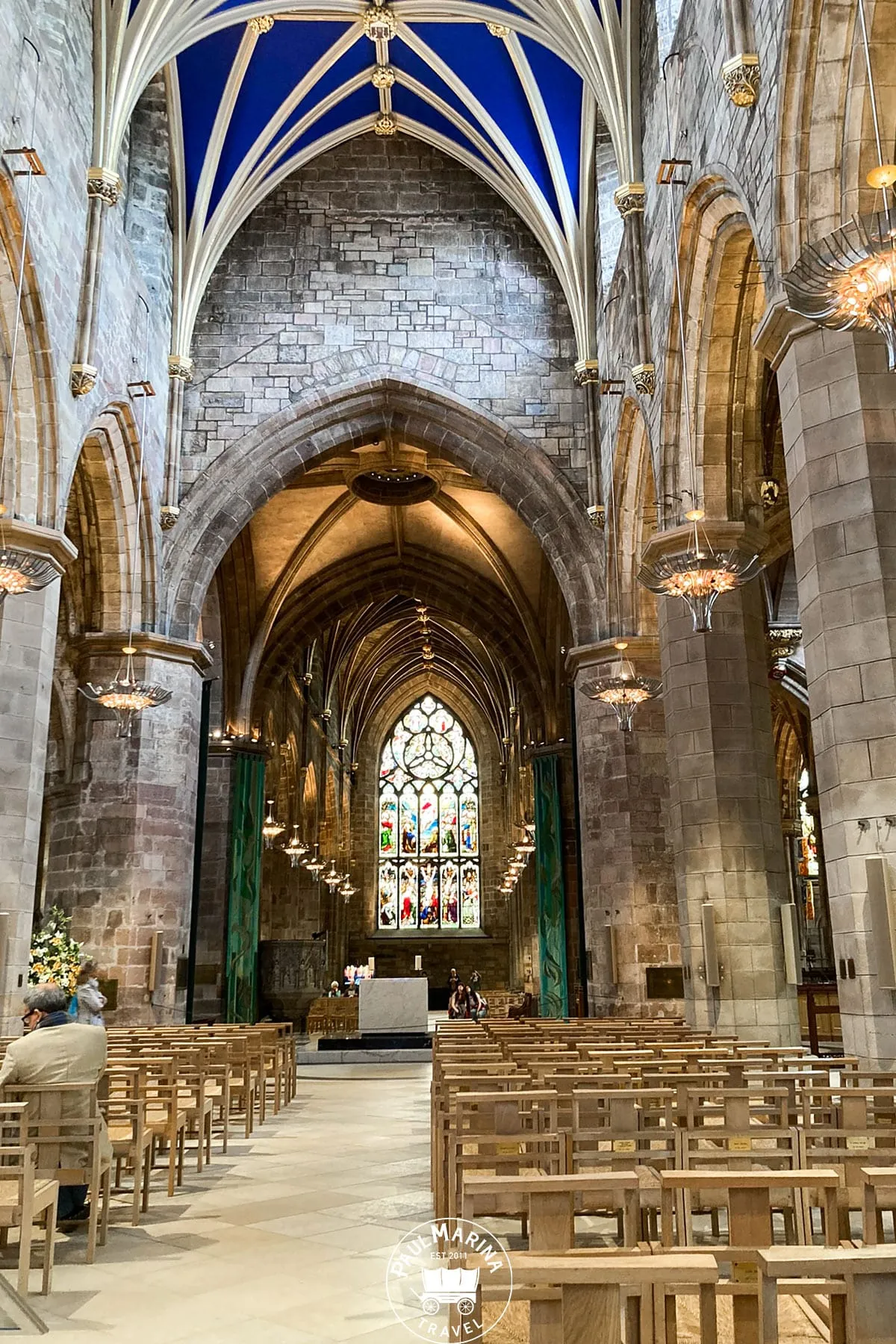 Photo: St Giles' Cathedral, via paulmarina.com
Masters of Improvisation
The schoolmasters who ran these institutions were remarkable figures who combined scholarly achievement with entrepreneurial necessity. Most held university degrees—often from Edinburgh itself—but found themselves teaching in conditions that would challenge any modern educator. Classrooms typically measured no more than twenty feet square, yet regularly accommodated fifty or sixty pupils ranging in age from five to fifteen.
David Stow, who taught in a converted bakery off the Cowgate during the 1780s, exemplified the resourcefulness these educators required. With no blackboard, he painted mathematical equations directly onto the whitewashed stone walls. When winter temperatures made writing impossible, he developed an oral teaching method that relied on memory games and spoken recitation. His pupils, drawn from families too poor to afford writing materials, learned to perform complex calculations entirely in their heads.
These masters earned modest salaries supplemented by fees from wealthier families who could afford to pay. The arrangement created a natural social mixing that would have been impossible in more stratified educational systems. The son of an advocate might sit beside the daughter of a blacksmith, both learning Latin from the same teacher who adjusted his methods to accommodate their different backgrounds and aspirations.
Curriculum Beyond Convention
The education provided in Edinburgh's parish schools extended far beyond basic literacy and numeracy. Many masters, frustrated by the limitations of traditional texts, developed their own teaching materials that reflected the intellectual ferment of Enlightenment Edinburgh. Geography lessons incorporated the latest discoveries from Captain Cook's voyages. Mathematics instruction included practical surveying techniques used in the city's ongoing expansion. Even elementary pupils learned principles of natural philosophy that university students might encounter only in advanced courses.
John Kirkwood, master of the Tron Parish school from 1763 to 1798, created what amounted to Edinburgh's first integrated curriculum. His pupils studied the geology of Arthur's Seat during morning walks, returned to analyse their findings using mathematical principles, then wrote compositions describing their discoveries in both English and Latin. This holistic approach produced graduates who understood their city not as a collection of separate subjects but as a unified field of inquiry.
 Photo: Arthur's Seat, via a.cdn-hotels.com
The influence of these innovative teaching methods extended well beyond Edinburgh. Many parish school graduates became teachers themselves, carrying Edinburgh's educational practices to rural Scotland and beyond. Others entered the university with preparation that exceeded anything available elsewhere in Britain, contributing to Edinburgh's reputation as a centre of learning that attracted students from across Europe and America.
The Charitable Dimension
Alongside the parish schools operated numerous charitable institutions that provided education to Edinburgh's poorest children. George Heriot's Hospital, founded by the goldsmith to James VI, offered boarding education to orphaned sons of Edinburgh burgesses. The Merchant Maiden Hospital performed a similar function for girls, while smaller foundations supported specific groups—the children of deceased ministers, the offspring of failed merchants, or the orphans of soldiers killed in foreign wars.
These charitable schools often achieved remarkable results despite operating on minimal budgets. The Edinburgh Charity Workhouse, established in 1743, combined basic education with practical training that enabled pauper children to support themselves as adults. Its graduates included several who became successful merchants, at least one university professor, and numerous skilled craftsmen who contributed to Edinburgh's economic development.
The female teachers who staffed many charitable institutions deserve particular recognition. Working within strict social constraints that limited their public roles, women like Margaret Sinclair of the Merchant Maiden Hospital developed teaching methods that emphasised moral development alongside intellectual achievement. Their pupils often received a more well-rounded education than boys in traditional schools, though social conventions prevented most from pursuing advanced study.
Physical Spaces of Learning
The actual locations where this education took place tell their own story about Edinburgh's commitment to learning despite material constraints. The Canongate Parish school occupied three rooms above a tavern, with pupils climbing a narrow turnpike stair past the public house to reach their classroom. The West Kirk school operated in the basement of the church itself, with lessons conducted by candlelight even during daylight hours.
These cramped conditions fostered an intimacy between teachers and pupils that larger institutions could not replicate. Masters knew not only their students' academic progress but their family circumstances, career aspirations, and personal challenges. This personal attention enabled them to tailor instruction in ways that anticipated modern educational theory by more than a century.
The physical remnants of these educational spaces can still be traced through Edinburgh's Old Town. A carved inscription above a doorway in Blackfriars Wynd marks the site of a charity school that operated from 1654 to 1847. The building that housed the Canongate academy retains its distinctive tall windows, designed to maximise available light for reading and writing.
Legacy in Stone and Mind
By the time state education arrived in the 1870s, Edinburgh's parish school system had been operating for over three centuries, quietly producing the educated citizenry that made Scotland's intellectual achievements possible. The lawyers who created Scotland's legal system, the ministers who led religious reform, the merchants who built Edinburgh's commercial empire, and the scholars who earned the city its reputation as the "Athens of the North" all received their foundational education in these modest classrooms tucked away in the city's closes and wynds.
Today's visitors to Edinburgh encounter a city celebrated for its university and cultural institutions, but the true foundation of its intellectual character lies in those forgotten parish schools where dedicated masters taught the children of ordinary citizens to read, write, and think with extraordinary skill. Their legacy lives on not in grand buildings or famous monuments, but in the enduring Scottish belief that education should be available to all, regardless of birth or circumstance—a principle that these humble schoolmasters proved could work in practice, one pupil at a time.