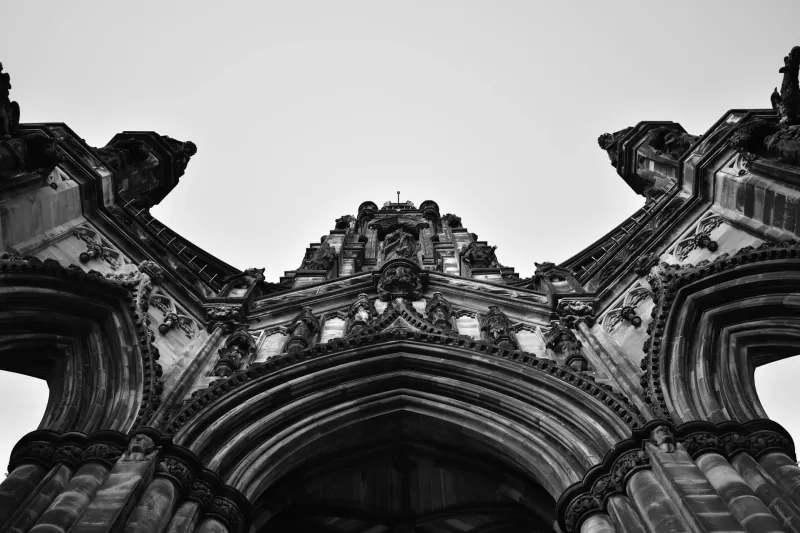
Following the Stone Roads Home
Edinburgh's architectural splendour didn't materialise from thin air—it emerged from a complex web of Scottish communities whose skilled hands transformed raw stone into the capital's enduring monuments. To truly understand Edinburgh's built heritage, one must trace the stone roads backwards, from the elegant crescents of the New Town to the windswept quarries of Fife, from the Castle Rock's volcanic foundations to the remote Borders villages where master masons learned their ancient craft.
This walking guide follows the physical and human geography of Edinburgh's construction, revealing how Scotland's regional identity is literally embedded in the capital's walls. Each stone tells a story not just of architectural ambition, but of the communities whose labour made that ambition reality.
Walk One: Craigleith's Golden Legacy
Begin at the western end of Princes Street, where the elegant facades of the New Town rise in uniform splendour. The honey-coloured sandstone that defines Edinburgh's Georgian character originated in the Craigleith Quarry, now buried beneath the city's northern suburbs. A short journey to Craigleith retail park reveals the site where generations of quarrymen extracted the stone that would become Charlotte Square, George Street, and countless other New Town landmarks.
The Craigleith quarries employed hundreds of workers from the surrounding villages. These weren't merely labourers—they were skilled craftsmen who understood stone's grain, weathering properties, and structural capabilities. The quarry's closure in the 1940s marked the end of a tradition stretching back centuries, but the community's legacy remains visible in every New Town street.
Walk north from Princes Street towards Stockbridge, noting how the stone's colour subtly varies between buildings. These variations reflect different quarry faces and extraction periods, creating an unintentional chronicle of the site's working life. The skilled eye can read Edinburgh's construction timeline in these tonal differences.
Walk Two: The Fife Connection
Edinburgh's relationship with Fife extends far beyond political history—it's written in stone throughout the Old Town. Begin at Edinburgh Castle, whose walls incorporate stone from multiple Fife quarries. The medieval builders understood that different stones served different purposes: hard whinstone for foundations, softer sandstone for carved details, and limestone for mortar.
Descend the Royal Mile towards Holyrood, observing the tenement walls that line the ancient street. Much of this stone arrived via the Queensferry passage, where ferry crews developed specialised techniques for transporting heavy cargo across the Forth. The ferryman's knowledge of tides, weather, and loading became as crucial to Edinburgh's construction as the mason's skill with chisel and square.
At John Knox's House, pause to examine the carefully carved stonework around the windows and doorways. This level of detail required master craftsmen, many trained in Fife's monastic workshops before the Reformation. The stone's journey from quarry to finished carving involved multiple specialists: quarrymen, transporters, rough masons, and finishing carvers.
Walk Three: The Pentland Quarries Trail
Venture south towards the Pentland Hills, where numerous small quarries supplied Edinburgh's expansion during the 18th and 19th centuries. These operations, often family-owned, provided employment for entire rural communities. The village of Swanston, now absorbed into Edinburgh's suburbs, once thrived on quarrying and stone-cutting.
The Pentland stone, harder and more durable than Craigleith sandstone, was preferred for structural work and paving. Walking through Edinburgh's older residential areas, the observant visitor can distinguish Pentland stone by its darker colour and more weathered appearance. This stone literally supports the city—forming foundations, retaining walls, and structural elements that remain hidden but essential.
The quarry communities developed their own customs, dialects, and social structures. Skilled stone-cutters commanded respect and good wages, whilst apprentices learned through years of careful observation. The knowledge passed between generations created dynasties of craftsmen whose expertise shaped Edinburgh's character.
Walk Four: The Volcanic Foundation
Edinburgh's most dramatic stones required no quarrying—they were provided by ancient volcanic activity. Walk from the Castle Rock to Arthur's Seat, tracing the city's geological backbone. The dark volcanic stone, known locally as whinstone, provided foundations for countless buildings whilst creating the dramatic topography that defines Edinburgh's character.
The communities that worked Edinburgh's volcanic stone faced unique challenges. Unlike sedimentary sandstone, volcanic rock required different tools, techniques, and expertise. The whin-dyke quarries around Arthur's Seat employed specialists who understood how to split and shape this stubborn material.
At Duddingston Village, examine the church walls built from local volcanic stone. The irregular blocks, fitted together with remarkable precision, demonstrate the mason's ability to work with nature's chaos rather than against it. This pragmatic approach characterised Edinburgh's builders—using whatever materials the landscape provided whilst achieving architectural elegance.
The Human Networks Behind the Stone
Edinburgh's construction depended on sophisticated networks connecting quarries, transport routes, and building sites. The city's masons belonged to ancient guilds that regulated quality, training, and working conditions. These organisations maintained standards across generations, ensuring that Edinburgh's buildings would endure.
The guild system also created social mobility for skilled craftsmen. A talented apprentice from a remote quarry village could eventually become a master mason working on prestigious New Town projects. This meritocratic tradition helped distribute Edinburgh's architectural knowledge throughout Scotland, improving building standards across the nation.
Reading the Stone Chronicles Today
Modern visitors can learn to read Edinburgh's stone like a book, with each building revealing its origins and construction period. The uniformity of New Town sandstone reflects centralised planning and consistent supply chains. The varied stones of the Old Town tell stories of organic growth, local materials, and changing fashions.
Conservation work continues to depend on understanding these historical supply chains. When Edinburgh's buildings require repair, craftsmen must source compatible stone from the same quarries—or find suitable alternatives when original sources are exhausted. This ongoing relationship between Edinburgh and Scotland's stone-producing regions ensures that traditional skills survive.
A Living Heritage
The communities that built Edinburgh stone by stone created more than architectural monuments—they established traditions of craftsmanship, quality, and regional cooperation that continue today. Scotland's construction industry still draws on knowledge developed in the quarries and workshops that supplied Edinburgh's builders.
For visitors exploring Scotland's capital, understanding this broader geography adds depth to every street and building. Edinburgh isn't merely a city—it's a collaboration between Scottish communities, a physical manifestation of the nation's collective skills and resources. The stones beneath your feet connect you to quarrymen in Fife, masons in the Borders, and transport workers on the Forth—all united in the grand project of building Scotland's enduring capital.
Walking Edinburgh's streets becomes a journey through Scotland itself, where every stone whispers stories of the hands that shaped it and the communities that made its journey from quarry to capital possible.