Where Commerce and Culture Collided
In the narrow wynds and broad squares of medieval Edinburgh, the clatter of coins mixed with the clash of ideas in a symphony that would define Scotland's capital for centuries. The city's historic markets were not merely places of trade—they were the crucible where Edinburgh's soul was forged, shaped by the daily interactions between fishwives hawking their catch and philosophers pondering humanity's great questions.
The Grassmarket, nestled beneath the imposing shadow of Edinburgh Castle, served as the city's primary livestock arena from the 15th century onwards. Here, Highland drovers descended from the mountains with their cattle, creating a cacophonous spectacle that drew crowds from across the Lothians. Yet this same cobbled expanse bore witness to public executions, political rallies, and the kind of robust social mixing that would become Edinburgh's hallmark.
The Lawnmarket's Literary Merchants
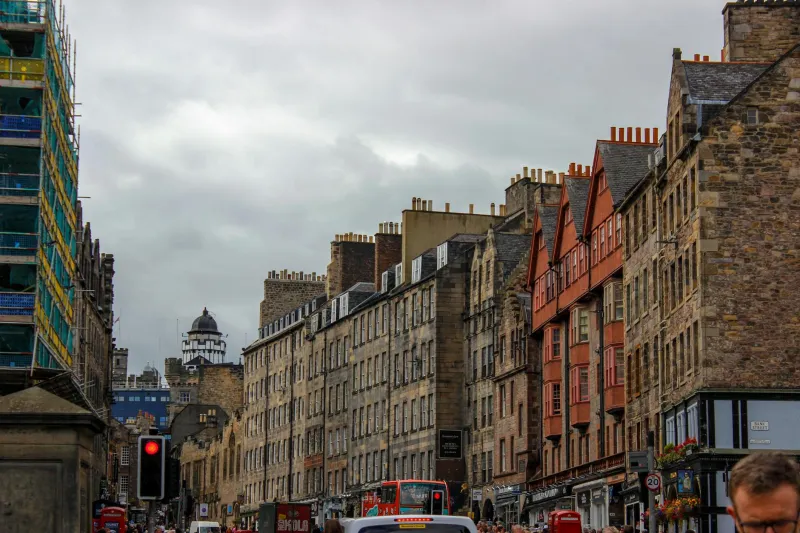
Ascending towards the Royal Mile, the Lawnmarket—originally the "Land Market"—buzzed with cloth merchants, tailors, and haberdashers whose fine fabrics attracted Edinburgh's growing professional classes. During the Scottish Enlightenment, these same streets witnessed an extraordinary convergence: merchants conducting business alongside luminaries such as David Hume and Adam Smith, who frequented the area's coffee houses and taverns.
The proximity was no coincidence. Edinburgh's compact geography forced all social strata into daily contact, creating what historian T.C. Smout described as "a unique urban laboratory for social experiment." Wealthy advocates purchasing silk from Flemish traders might find themselves debating natural philosophy with the very merchants who supplied their wardrobes.
Fishwives: The Uncrowned Queens of Commerce
Perhaps no figures better embodied Edinburgh's market culture than the legendary fishwives of Newhaven and Musselburgh. These formidable women, who trudged miles daily to sell their fresh catches, became renowned throughout Scotland for their wit, resilience, and fearless tongues. They established their own informal courts in the Fishmarket Close, settling disputes with a combination of sharp humour and sharper words that could reduce grown men to submission.
Their influence extended far beyond commerce. The fishwives' distinctive cries—advertising everything from "caller herrin'" to "fresh haddies"—became part of Edinburgh's acoustic landscape, inspiring poets like Robert Fergusson and later influencing Sir Walter Scott's characterisations of Edinburgh's working classes.
The Social Architecture of Trade
Edinburgh's markets operated according to unwritten but strictly observed social protocols. The High Street's Wednesday markets saw careful segregation: butchers claimed the upper sections near St. Giles' Cathedral, while vegetable sellers occupied the lower reaches towards the Canongate. Yet within these boundaries, remarkable social fluidity existed.
Contemporary accounts describe lawyers' wives purchasing alongside serving maids, whilst university students debated philosophy with spice merchants who had travelled from the Low Countries. This daily mingling of social classes created what sociologists now recognise as Edinburgh's distinctive egalitarian streak—a characteristic that persists in the city's cultural DNA.
Markets as Political Arenas
The city's trading spaces inevitably became venues for political expression. During the turbulent 17th century, the Grassmarket witnessed numerous Covenanter executions, whilst market traders often served as informal news networks, spreading political intelligence across Scotland's communication networks.
The 1707 Act of Union sparked particular controversy in Edinburgh's markets, where English goods suddenly competed with traditional Scottish products. Contemporary pamphlets record heated debates between stallholders about national identity, economic sovereignty, and cultural preservation—themes that continue to resonate in modern Scottish political discourse.
Surviving Traditions in Modern Edinburgh
Today's visitors can still experience echoes of this vibrant market culture throughout Edinburgh. Stockbridge Market, held every Saturday, maintains the intimate scale and community atmosphere that characterised historic Edinburgh trading. Local producers sell everything from artisanal cheeses to handcrafted jewellery, whilst maintaining the kind of personal relationships between traders and customers that defined medieval commerce.
The Grassmarket itself remains a focal point for weekend markets, where contemporary traders continue traditions stretching back five centuries. The area's numerous pubs and restaurants occupy buildings that once housed grain merchants and cattle dealers, creating tangible links between past and present.
The Intellectual Marketplace
Perhaps most remarkably, Edinburgh's markets fostered intellectual exchange alongside commercial trade. The proximity of the University to the city's trading areas meant that academic ideas circulated amongst merchants and craftsmen, creating what historian Arthur Herman termed "the world's first truly democratic intellectual culture."
This tradition continues in modern Edinburgh's festival culture, where the Fringe transforms the city into a vast marketplace of ideas, echoing the medieval fusion of commerce and creativity that first emerged in the Grassmarket's bustling squares.
Legacy of the Trading Grounds
The influence of Edinburgh's historic markets extends far beyond their physical boundaries. They established patterns of social interaction, cultural exchange, and economic innovation that continue to shape the city's character. From the robust debate culture of Edinburgh's pubs to the entrepreneurial spirit driving the city's technology sector, the legacy of those ancient trading grounds remains vibrantly alive.
For visitors seeking to understand Edinburgh's distinctive character, these historic market spaces offer invaluable insights into how commerce, culture, and community combined to create one of Europe's most remarkable urban societies. The stones may be worn smooth by centuries of trading, but the spirit of those bustling marketplaces continues to animate Scotland's ancient capital.