The Aromatic Revolution in Auld Reekie
Long before Edinburgh earned its reputation as a festival city, it served as the caffeine-fuelled laboratory of human thought. The coffee houses that proliferated throughout the Old Town's closes and wynds during the 18th century weren't merely places of refreshment—they were the beating heart of intellectual Scotland, where revolutionary ideas percolated alongside the exotic beans that gave these establishments their name.
Unlike London's coffee houses, which often catered to specific trades or social classes, Edinburgh's establishments embraced a remarkable democratic spirit. University professors rubbed shoulders with struggling poets, prosperous merchants debated with impoverished philosophers, and the rigid hierarchies of Scottish society temporarily dissolved in clouds of tobacco smoke and animated conversation.
Fortune's Coffee House: The Unofficial Parliament of Scottish Letters
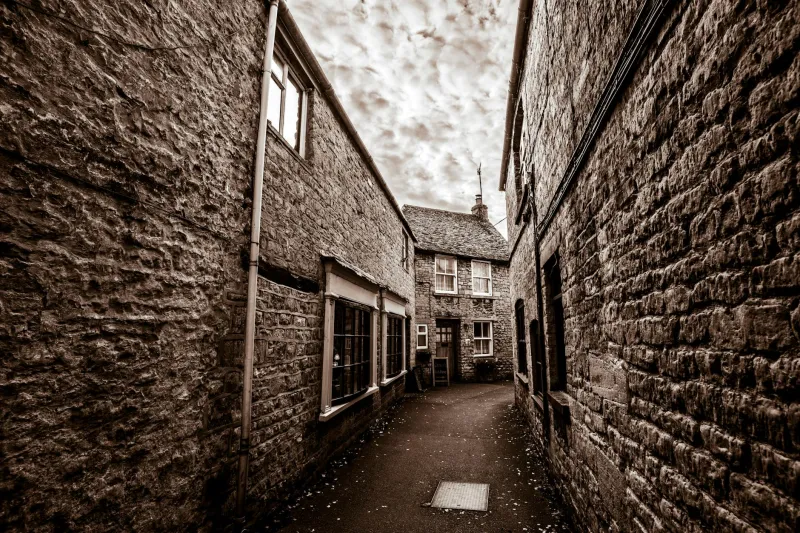
Perhaps no establishment better embodied Edinburgh's coffee house culture than Fortune's, located in the cramped confines of Stamp Office Close. This unprepossessing venue, accessed through a narrow wynds off the High Street, became the unofficial headquarters of Scottish intellectual life during the Enlightenment's golden age.
Here, David Hume would hold court in his favourite corner booth, expounding philosophical theories that challenged the very foundations of human knowledge. His regular sparring partner, the economist Adam Smith, frequently occupied the adjacent table, sketching out theories of moral sentiment and market behaviour that would later revolutionise economic thought. The proximity of these towering intellects created an atmosphere of perpetual intellectual ferment.
Fortune's proprietor, a shrewd businessman named James Fortune, understood his establishment's unique position in Edinburgh society. He maintained an extensive collection of newspapers, periodicals, and pamphlets—many available nowhere else in Scotland. Patrons could spend entire afternoons absorbing the latest developments from London, Paris, or Amsterdam whilst nursing a single cup of coffee.
The Literary Cauldron of Allan Ramsay's Establishment
Allan Ramsay the Elder, poet and founder of Britain's first circulating library, operated a coffee house that doubled as Edinburgh's premier literary salon. Located near the Grassmarket, Ramsay's establishment attracted the city's emerging generation of writers and publishers.
Robert Burns, during his triumphant Edinburgh sojourns, could often be found at Ramsay's, regaling audiences with impromptu recitations of his latest verses. The young Walter Scott, then an ambitious advocate with literary aspirations, absorbed the storytelling traditions that would later inform his historical novels. James Boswell, Johnson's future biographer, honed his conversational skills in Ramsay's animated atmosphere.
Ramsay's coffee house also served as an informal publishing house. Manuscripts circulated between tables, collaborative projects emerged from chance encounters, and the city's growing network of printers found their next publications through coffee house connections.
The Medical Men's Sanctuary
Edinburgh's reputation as Europe's premier medical school owed much to the coffee house culture that sustained its professors and students. The medical coffee houses, clustered around the University's precincts, became laboratories of anatomical and surgical knowledge.
Dr Joseph Black, discoverer of carbon dioxide and pioneer of chemical theory, regularly demonstrated experiments using equipment borrowed from his laboratory. His coffee house lectures, delivered to rapt audiences of students and fellow physicians, often proved more influential than his formal university presentations.
The notorious body-snatchers who supplied Edinburgh's anatomy schools also frequented these establishments, though their business was conducted in whispered conversations rather than public discourse. The coffee houses provided neutral ground where the city's medical establishment could maintain necessary but uncomfortable relationships with the resurrection men.
The Publishers' Exchange
Edinburgh's emergence as a major publishing centre during the 18th century owed much to the connections forged in coffee house booths. The city's printers, publishers, and booksellers used these establishments as informal exchanges, negotiating deals, sharing information, and coordinating the complex logistics of book production and distribution.
William Creech, publisher of Burns's Edinburgh edition and numerous Enlightenment classics, conducted much of his business from his regular table at a High Street coffee house. Here he would meet authors, negotiate contracts, and coordinate with the network of booksellers who distributed Edinburgh publications throughout Britain and beyond.
The Democratic Experiment
What distinguished Edinburgh's coffee house culture from similar phenomena elsewhere was its genuinely democratic character. The city's compact geography and relatively small intellectual community created an environment where social barriers proved surprisingly permeable.
A young law student with a brilliant insight could find himself debating with established professors. Struggling writers gained access to wealthy patrons through coffee house introductions. The traditional Scottish respect for learning, regardless of social origin, found perfect expression in these egalitarian establishments.
The Revolutionary Brew
The ideas generated in Edinburgh's coffee houses didn't remain confined to academic discussion. The political theories developed by Hume, Smith, and their contemporaries provided intellectual foundations for democratic movements across Europe and America. The coffee houses served as testing grounds where abstract philosophical concepts were refined through debate and discussion.
Francis Hutcheson's theories of natural rights, developed partly through coffee house conversations, influenced Thomas Jefferson's drafting of the Declaration of Independence. Adam Smith's economic theories, similarly refined through countless coffee house debates, provided intellectual justification for free market capitalism.
Modern Echoes of Ancient Conversations
Today's Edinburgh retains traces of its coffee house heritage in establishments that continue the tradition of intellectual discourse over caffeinated beverages. Deacon's House Café, housed in a historic building near the Royal Mile, occupies premises once associated with the city's craft guilds and their meeting places.
The Elephant House on George IV Bridge, where J.K. Rowling wrote portions of the early Harry Potter novels, demonstrates the continuing power of Edinburgh coffee houses to nurture literary creativity. Clarinda's Tea Room in Canongate, though serving tea rather than coffee, maintains the intimate atmosphere that characterised the city's historic establishments.
For visitors seeking to understand Edinburgh's intellectual heritage, these modern establishments provide more than refreshment—they offer connection to a tradition where great ideas emerged from the simple act of gathering, talking, and thinking together. The Scottish Enlightenment's greatest achievement may have been proving that world-changing philosophy could emerge from the most humble of settings: a few tables, some chairs, and the democratic promise of good conversation over a warming cup.