The Engineering Marvel That Conquered Edinburgh's Topography
When Edinburgh's first cable tram clattered down Hanover Street in August 1871, it marked more than a transport milestone—it represented the conquest of geography itself. The city's notorious hills, which had confined residents to their own quarters for centuries, suddenly became navigable arteries connecting previously isolated communities.
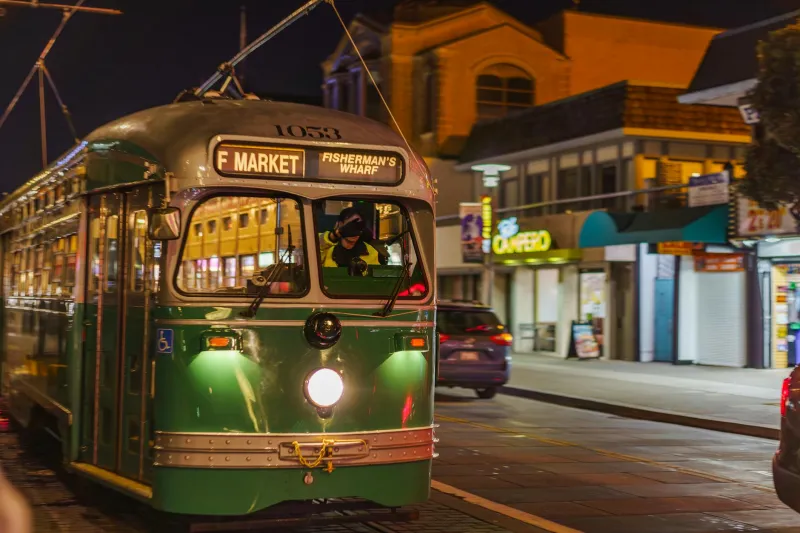
The Edinburgh Street Tramways Company faced challenges that would have daunted lesser engineers. The precipitous descent from the New Town to Leith, the vertiginous climb to Morningside, and the treacherous gradients around Arthur's Seat demanded revolutionary solutions. Their answer lay in an ingenious cable system that would inspire similar networks from San Francisco to Dunedin.
Stitching Together a Fragmented Capital
Before the trams, Edinburgh existed as a collection of distinct villages—the Old Town's medieval warrens, the New Town's Georgian squares, Leith's bustling port, and Morningside's genteel suburbs. Each maintained its own character, customs, and class distinctions. The tram network didn't merely connect these areas; it began to blur the boundaries between them.
Working families in Gorgie could now reach employment in the New Town within minutes rather than hours. Domestic servants living in Canongate tenements found themselves with unprecedented mobility, able to serve households across the city's breadth. The psychological impact proved as significant as the practical—Edinburgh's residents began to see their city as a unified whole rather than a patchwork of separate territories.
The Democracy of the Rails
Perhaps nowhere was the tram's social impact more profound than in its democratisation of movement. A penny fare opened Edinburgh's entirety to those previously confined by distance and steep climbs. The system's egalitarian nature—with first and second-class carriages sharing the same rails—created unprecedented social mixing.
Contemporary accounts describe lawyers from Charlotte Square sharing carriages with fishwives from Newhaven, students from the University mingling with craftsmen from the Grassmarket. These daily encounters, however brief, began to erode the rigid social stratifications that had defined Edinburgh society for generations.
The Cable Car Pioneers
The engineering prowess behind Edinburgh's cable system deserves particular recognition. The Hanover Street route, with its 1-in-12 gradient, required cables running at precisely calculated tensions through underground conduits. The central powerhouse on Henderson Row operated massive steam engines that pulled cables throughout the network—a mechanical symphony that provided the city's heartbeat for decades.
These early cable cars became symbols of Edinburgh's progressive spirit. Visitors marvelled at carriages ascending seemingly impossible inclines without visible means of propulsion. The system attracted international attention, with delegations arriving from across the Empire to study Edinburgh's solutions to urban transport challenges.
Electric Dreams and Expanding Horizons
The transition to electric trams in the 1920s marked Edinburgh's second transport revolution. The new system extended the network's reach into previously inaccessible areas—Corstorphine, Fairmilehead, and the growing suburbs beyond the city's traditional boundaries. Electric trams moved faster, carried more passengers, and operated more reliably than their cable predecessors.
This expansion coincided with Edinburgh's suburban growth. The tram routes didn't simply follow development—they encouraged it. New housing estates sprouted along the lines, creating ribbon developments that remain characteristic of Edinburgh's outer districts today.
The Controversial End of an Era
The tram system's demise in 1956 remains one of Edinburgh's most contentious municipal decisions. Post-war planners, seduced by the promise of motor transport, viewed trams as outdated obstacles to modern traffic flow. The final journey—from Shrubhill to Braids—was witnessed by thousands of mourners who recognised they were witnessing the end of an era.
The decision's shortsightedness became apparent within decades. Traffic congestion, air pollution, and the social isolation of car-dependent communities highlighted the wisdom of the Victorian transport planners who had prioritised collective over individual mobility.
Ghost Lines and Living Memory
Today's Edinburgh retains numerous traces of its tramway heritage. The broad boulevards of Princes Street and George Street were widened to accommodate tram tracks. Curious indentations in roadways mark former rail beds, while abandoned depot buildings serve as reminders of the network's former extent.
The modern tram system, inaugurated in 2014 after considerable controversy, follows portions of the historic network. The route from the city centre to Leith echoes the original cable car line, while future extensions may restore connections to areas served by the Victorian system.
A Legacy Written in Stone and Memory
Edinburgh's tram era represents more than transport history—it embodies the Victorian confidence that engineering could overcome natural obstacles and social divisions. The system's 85-year operation fundamentally altered Edinburgh's character, creating the connected, accessible city that visitors experience today.
For contemporary explorers of Scotland's capital, understanding this transport heritage adds depth to every journey through the city. The broad streets that accommodate today's buses once rang with the clatter of cable cars. The neighbourhoods that seem naturally integrated were once isolated communities brought together by the democratic promise of the rails.
The story of Edinburgh's trams is ultimately the story of a city learning to see itself as greater than the sum of its parts—a lesson as relevant today as it was when the first cable car conquered the capital's formidable hills.