The Theatre of Daily Life
Step through the worn threshold of any surviving Edinburgh tenement kitchen, and you enter a space that defied every convention of Victorian domestic propriety. Here, in rooms measuring perhaps ten feet square, entire families conducted the full symphony of daily existence. The kitchen served simultaneously as cooking space, dining room, parlour, laundry, and often bedroom—a masterclass in functional design born from necessity rather than choice.
These compact chambers, tucked behind the grand facades of Edinburgh's working tenements, tell a story far removed from the polished narratives of New Town elegance. They speak instead of ingenuity, community, and the remarkable adaptability of ordinary Scots who transformed architectural constraints into domestic poetry.
The Architecture of Survival
The typical Edinburgh tenement kitchen followed a remarkably consistent template across the city's working districts. Dominated by the coal-fired range—that iron altar around which family life revolved—these spaces maximised every available inch through clever built-in furniture and multi-functional fixtures.
The range itself was far more than a cooking appliance. Its oven baked the family's bread, its hob boiled endless kettles for tea, washing, and cleaning, whilst its firebox provided the only source of warmth during Edinburgh's bitter winters. The mantlepiece above served as display case, storage shelf, and social focal point, often adorned with the family's few precious possessions: a clock, photographs, perhaps a piece of inherited china.
Built-in beds, known locally as "box beds" or "bed-in-the-wa'," folded into alcoves during daylight hours, transforming sleeping quarters into additional living space. These ingenious fixtures, complete with wooden doors for privacy and warmth, allowed families to maintain dignity even in the most cramped conditions.
The Rituals of the Range
Every morning began with the same ritual: clearing yesterday's ashes, laying fresh coal, and coaxing the range back to life. This daily ceremony, performed by countless Edinburgh housewives across generations, established the rhythm that would govern the entire household. The range's temperament determined when meals could be prepared, when water could be heated for washing, and when the family could gather in relative comfort.
Oral histories collected by the Edinburgh City Museums reveal the intimate relationship between tenement dwellers and their ranges. Mary McLeod, who grew up in the Grassmarket during the 1930s, recalled: "You knew every mood of that range better than you knew your own husband. When she was drawing well, the whole kitchen sang. When she was sulking, the whole family suffered."
The range also served as the neighbourhood's unofficial communication centre. The quality of smoke rising from tenement chimneys telegraphed everything from economic hardship to family celebrations, creating an aerial network of domestic intelligence that bound communities together.
Community Beyond Four Walls
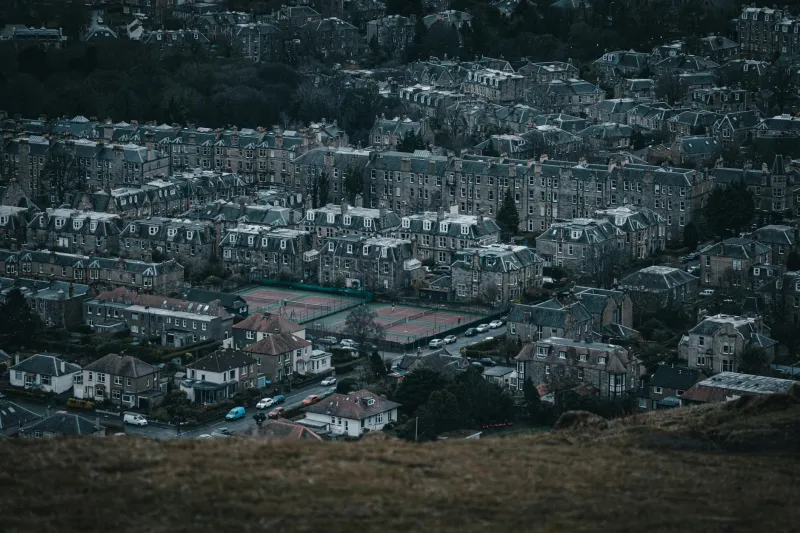
Perhaps most remarkably, these tiny kitchens functioned as social hubs that extended far beyond individual family units. Shared back courts and common washhouses created networks of mutual support, whilst the proximity of tenement living meant that the boundaries between private and communal life remained perpetually fluid.
Neighbours borrowed ingredients, shared cooking facilities during busy periods, and gathered around each other's ranges during times of celebration or crisis. The tenement kitchen, despite its modest dimensions, facilitated a level of community integration that modern suburban living struggles to replicate.
Preserving the Memory
Today, authentic tenement kitchens survive in remarkable condition at locations such as the Tenement House on Buccleuch Street, maintained by the National Trust for Scotland, and within the collections of the Museum of Edinburgh. These preserved spaces offer contemporary visitors an unvarnished glimpse into the domestic realities that shaped generations of Edinburgh families.
The contrast with New Town grandeur could hardly be more stark, yet these humble rooms arguably represent a more honest expression of Edinburgh's character. Here, away from the architectural theatre of Georgian squares and Royal Mile pageantry, ordinary Scots created extraordinary lives through resourcefulness, community spirit, and an unshakeable determination to maintain dignity regardless of circumstances.
The Legacy Lives On
The influence of the tenement kitchen extends far beyond its historical moment. The Scottish emphasis on hospitality, the tradition of gathering around the kitchen table, and the cultural importance of the "cuppa" all trace their roots to these compact spaces where warmth—both literal and metaphorical—was carefully cultivated and generously shared.
Modern Edinburgh continues to bear the imprint of tenement living. The city's renowned café culture, its tradition of close-knit neighbourhood communities, and its characteristic blend of practicality and sociability all reflect values forged in those small, warm kitchens where Scotland's working classes created their own version of domestic paradise.
In recognising the tenement kitchen as a defining element of Edinburgh's heritage, we acknowledge that the city's soul was shaped not only in the drawing rooms of Princes Street, but equally in the humble hearths where ordinary families transformed survival into an art form.