Stand today at the junction of the Lawnmarket and George IV Bridge, and you witness the intersection of two Edinburghs: the ancient Royal Mile stretching towards the castle, and the Georgian New Town spreading northward in measured elegance. Yet between these two famous districts once thrived a third Edinburgh—a world of needle and thread, bolt and button, where the textile trades that clothed the city's golden age created their own distinct geography of commerce and craftsmanship.
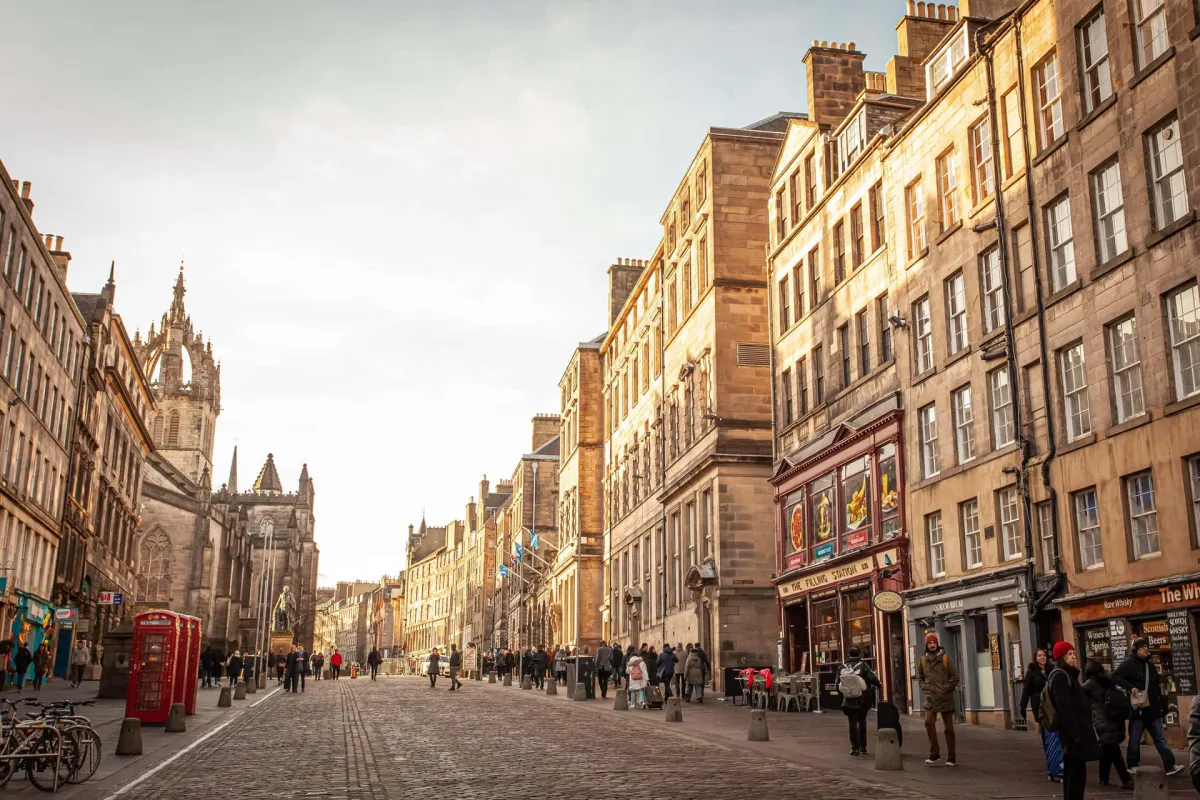 Photo: Royal Mile, via wallpapers.com
The Lawnmarket: Scotland's Fabric Heart
Begin your exploration at the head of the Lawnmarket, where the name itself tells the story. Originally the "Land Market," this broad stretch of the Royal Mile evolved into Edinburgh's primary textile trading ground, where merchants displayed their wares on wooden stalls that extended far into the street. By the 1750s, the area had become synonymous with fine fabrics, earning its current name from the lawn—a fine linen—that formed the backbone of the trade.
The building that now houses Deacon's House Café once served as the headquarters of the Incorporation of Tailors, one of Edinburgh's most powerful trade guilds. Walk through its entrance and imagine the scene on market days: bolt after bolt of cloth from across Scotland and beyond, arranged according to strict guild regulations that determined who could sell what, where, and when.
Here, Highland wool met Flemish lace, while silk from London competed with linen woven in Fife. The merchants who controlled this trade were among Edinburgh's wealthiest citizens, their prosperity built on understanding the complex relationship between raw materials, skilled labour, and fashionable demand.
Down the Royal Mile: The Needle Trades
Continue down the Royal Mile towards the Canongate, and the textile story becomes more intimate and complex. The closes that branch off the main thoroughfare once housed hundreds of seamstresses, embroiderers, and specialist needleworkers whose skills transformed raw cloth into the garments that defined Georgian Edinburgh's social distinctions.
Turn into Advocates Close, where the narrow wynds echo with the memory of busy workshops. In these cramped spaces, master tailors employed dozens of apprentices and journeymen in a carefully structured hierarchy that took years to climb. The most skilled among them could cut a coat to fit perfectly from a single measurement, while others specialised in particular garments—breeches, waistcoats, or the elaborate gowns that Edinburgh's ladies required for the city's increasingly sophisticated social season.
The economics of this trade reveal much about Georgian Edinburgh's social structure. A master tailor's workshop might simultaneously produce a silk court dress costing more than a labourer's annual wage and a simple woollen gown affordable to a merchant's daughter. This flexibility required not only technical skill but acute business sense, as tailors navigated the complex credit arrangements that governed much of Edinburgh's commerce.
The Canongate: Where Fashion Met Function
Descend further to the Canongate, where the textile trades took on a different character. Here, closer to the Palace of Holyroodhouse and the residences of Edinburgh's aristocracy, the emphasis shifted from commerce to craftsmanship of the highest order. The buildings that line this section of the Royal Mile once housed court tailors, silk mercers, and embroiderers whose work adorned the most important figures in Scottish society.
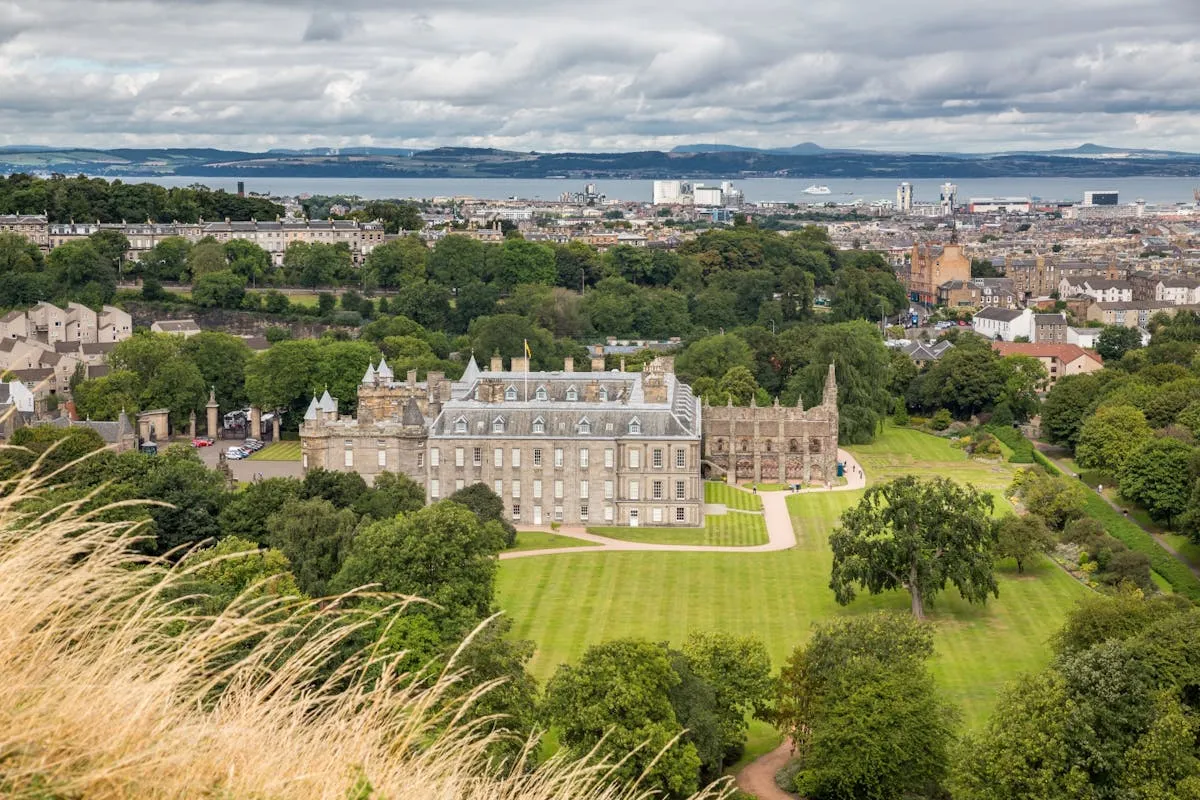 Photo: Palace of Holyroodhouse, via images.musement.com
The tenement at 172 Canongate, now residential, once contained the workshop of James Norrie, court tailor to the Duke of Hamilton and supplier to many of Edinburgh's noble families. Norrie's account books, preserved in the National Archives, reveal the extraordinary complexity of Georgian menswear: a single gentleman's outfit might require six different types of fabric, dozens of buttons crafted from various materials, and weeks of hand-stitching to complete.
Women's fashion demanded even greater skill and creativity. The seamstresses of the Canongate mastered techniques that modern couturiers would recognise: complex draping, precise fitting, and decorative needlework that transformed simple fabrics into works of art. Their customers included not only Edinburgh residents but visitors from across Scotland who came to the capital specifically to update their wardrobes according to the latest fashions.
The Cowgate: Industrial Innovation
From the Canongate, descend into the Cowgate to discover where Edinburgh's textile trades began their transformation from craft to industry. This lower street, running parallel to the Royal Mile, housed the workshops and warehouses that supplied the city's growing demand for everyday clothing.
Here, innovation flourished alongside tradition. Scottish entrepreneurs experimented with new production methods that increased efficiency while maintaining quality. Water-powered machinery, introduced gradually from the 1760s onwards, enabled Edinburgh's textile workers to compete with the emerging industrial centres of England while preserving the skilled handwork that distinguished Scottish products.
The building that now houses the Beehive Inn once contained one of Edinburgh's largest cloth-finishing operations, where raw textiles received the final treatments that determined their quality and appearance. The processes involved—fulling, dyeing, pressing, and calendering—required both technical knowledge and artistic judgment, as workers adjusted their methods to bring out the best qualities in each type of fabric.
Grassmarket: The Common Touch
Complete your textile tour in the Grassmarket, where Edinburgh's clothing trades served the city's working population. The shops and stalls that surrounded this ancient marketplace provided ready-made garments, second-hand clothing, and repair services that kept Edinburgh's labourers, servants, and small tradesmen decently dressed despite modest incomes.
The social geography of the Grassmarket reflected the democratic nature of Edinburgh's textile trades. Wealthy merchants might shop here for everyday items, while their servants could find affordable versions of fashionable styles. This mixing of classes around the common need for clothing created a unique atmosphere that visitors from more stratified societies found remarkable.
The Thread That Bound the City
Walking Edinburgh's textile quarter today requires imagination to reconstruct the bustling world that once filled these streets with the sounds of commerce and craftsmanship. Yet traces remain for those who know how to look: the wide shop fronts that once displayed bolts of fabric, the tall windows that maximised light for detailed needlework, and the narrow closes where master craftsmen trained successive generations of apprentices.
The decline of Edinburgh's textile trades began in the early 19th century, as industrial production shifted to more suitable locations and changing fashions reduced demand for traditional Scottish products. By 1850, most of the workshops had closed, their skilled workers scattered to other trades or emigrated to seek opportunities elsewhere.
Yet the legacy of Edinburgh's textile age extends far beyond economic history. The standards of craftsmanship established by Georgian tailors and seamstresses influenced Scottish manufacturing for generations. The business networks they created connected Edinburgh to markets across Britain and Europe. Most importantly, the democratic nature of the clothing trades—where skill mattered more than birth—exemplified the social mobility that made Edinburgh a beacon of opportunity in an age when such chances were rare.
Today's visitors to Edinburgh experience a city where fashion and style remain important, from the designers who show during the Festival to the traditional clothiers who maintain Scotland's sartorial heritage. This continuity reflects something deeper than mere commercial survival—it represents the enduring influence of those Georgian needleworkers who understood that clothing is never merely functional, but always expresses something essential about both the wearer and the society that creates it.