The Alchemy of Ideas
Within the narrow confines of Edinburgh's Old Town, a revolution unfolded not through grand proclamations or political upheaval, but through the methodical arrangement of tiny lead characters in wooden composing sticks. During the 18th and early 19th centuries, Scotland's capital emerged as the publishing centre of the British Isles, a transformation achieved not by scholars alone but by the skilled craftsmen who translated intellectual ambition into physical reality.
The printing houses of the Canongate and High Street operated with an intensity that matched the era's intellectual ferment. In workshops barely wide enough for two men to pass, master printers orchestrated a complex ballet of apprentices, journeymen, and specialists whose collective labour produced everything from philosophical treatises to popular ballads, legal documents to radical pamphlets that would influence thought across the English-speaking world.
The Masters of the Trade
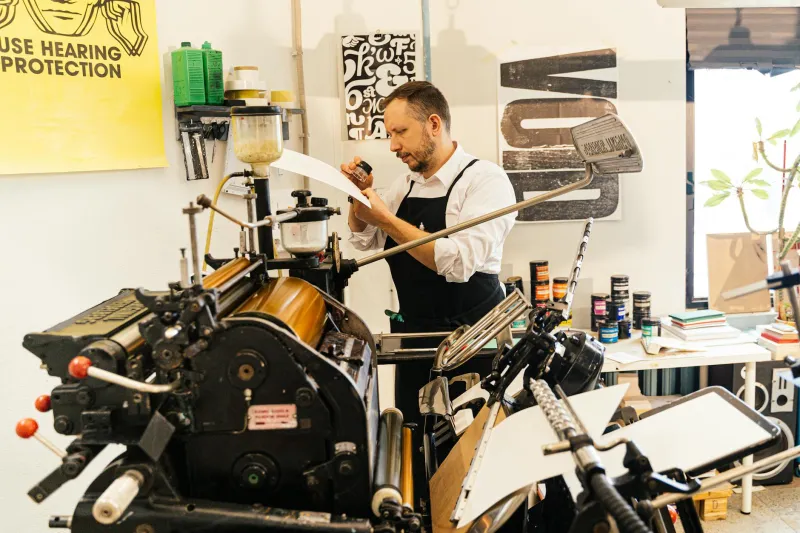
At the apex of this industry stood figures whose names deserve recognition alongside their more celebrated contemporaries. William Smellie, who established his printing house in Anchor Close in 1765, became the craftsman behind the first edition of the Encyclopædia Britannica. His workshop, occupying three floors of a converted tenement, employed twelve full-time workers and maintained six printing presses in constant operation.
 Photo: William Smellie, via c8.alamy.com
Smellie's approach exemplified the Edinburgh printing philosophy: meticulous attention to typography and layout combined with an entrepreneurial willingness to tackle ambitious projects that London printers deemed too risky or unprofitable. His compositors worked by candlelight through winter nights, setting type for volumes that would define knowledge for generations of readers across Britain and her colonies.
Equally significant was Agnes Campbell, who inherited her husband's printing business in the Grassmarket in 1782 and expanded it into one of Edinburgh's most successful operations. Campbell's firm specialised in legal printing, producing the writs, contracts, and court documents that underpinned Scotland's distinctive legal system. Her workshop trained more female compositors than any other Edinburgh establishment, challenging contemporary assumptions about women's capabilities in skilled trades.
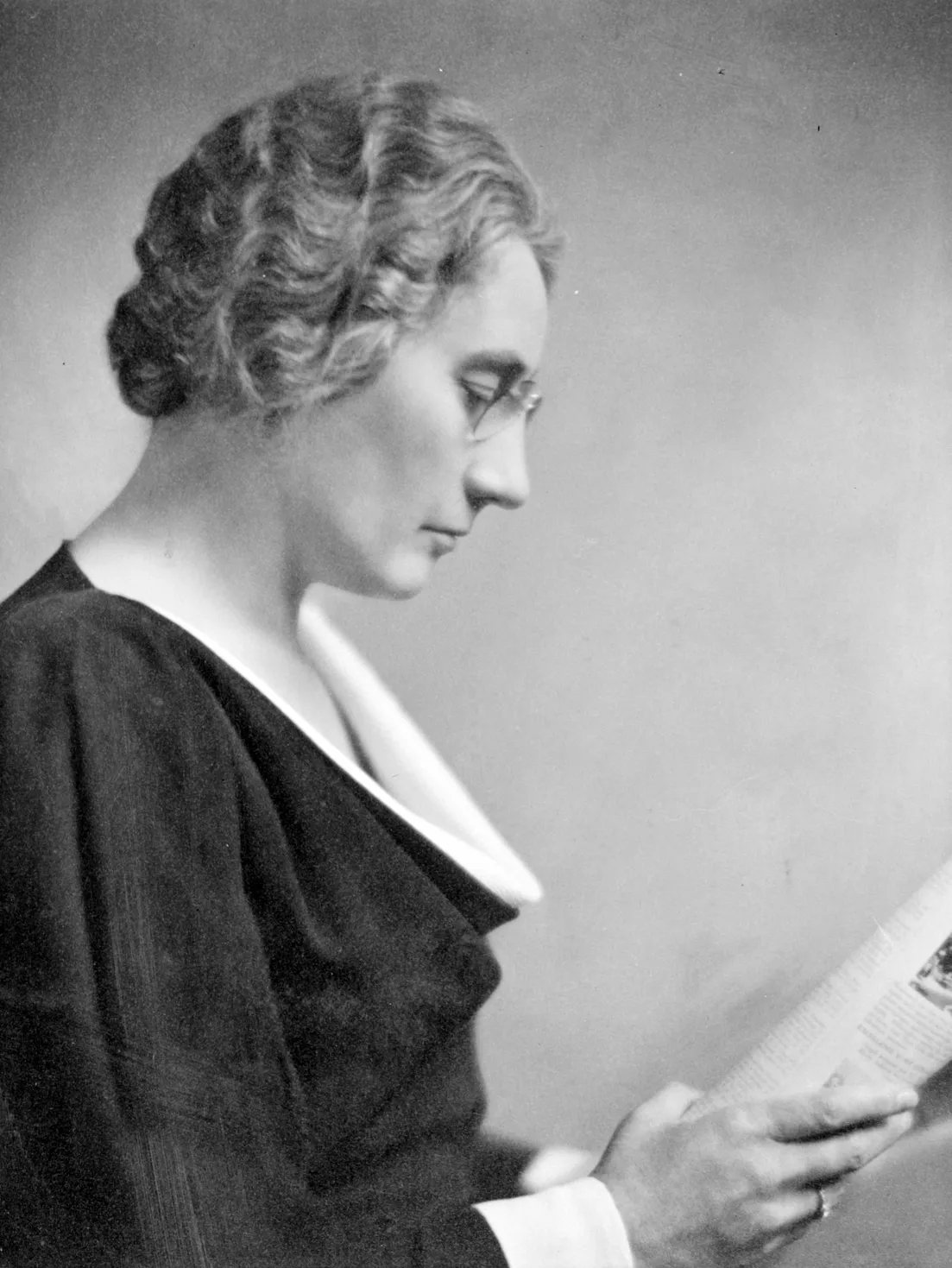 Photo: Agnes Campbell, via www.ola.org
The Apprentice System
The foundation of Edinburgh's printing supremacy rested upon an apprenticeship system that combined rigorous technical training with exposure to the era's most advanced ideas. Boys as young as fourteen entered seven-year indentures that would transform them from illiterate street children into skilled craftsmen capable of setting complex mathematical formulae or classical Greek texts with equal precision.
These apprentices began their careers sweeping floors and mixing ink, but within months they were learning to read backwards whilst selecting individual letters from vast type cases containing thousands of characters. The best apprentices could set forty lines of text per hour, their fingers moving across the type cases with a speed and accuracy that seemed almost supernatural to observers.
The workshops themselves functioned as informal universities. Apprentices absorbed knowledge not only about printing techniques but about the content they were setting. Many became remarkably well-read, engaging in debates about philosophy, politics, and literature that rivalled those conducted in Edinburgh's famous coffee houses.
The Technology of Transformation
Edinburgh's printing establishments invested heavily in the latest technology, often importing equipment directly from continental Europe or commissioning local engineers to build improved versions of existing machinery. The Foulis Press, established by Robert and Andrew Foulis in their workshop near St Giles' Cathedral, operated presses capable of producing illustrations of unprecedented quality, making Edinburgh a centre for fine art reproduction as well as text printing.
The technical demands of different types of publication required specialised skills and equipment. Legal documents demanded absolute accuracy and clarity, whilst popular broadsides needed to be produced quickly and cheaply. Scientific works required the ability to set complex mathematical notation, and classical texts demanded extensive collections of Greek and Hebrew type.
This diversity of requirements created a community of specialists: punch-cutters who carved the original letter forms, type-founders who cast the metal characters, ink-makers who formulated compounds suitable for different papers and purposes, and bookbinders whose skills determined whether a volume would survive decades of use or fall apart within months.
The Workshop Geography
The concentration of printing establishments along the Royal Mile created a unique urban environment where the sound of printing presses provided a constant background rhythm to daily life. Neighbours complained about the noise of machinery operating through the night, whilst the acrid smell of ink and metal permeated entire closes and wynds.
 Photo: Royal Mile, via www.nothingfamiliar.com
Yet this density also fostered innovation through competition and collaboration. Printers borrowed type from one another for unusual projects, shared technical knowledge about new processes, and developed informal networks that could mobilise resources for major publishing ventures. When the Edinburgh Review required rapid production of large print runs, multiple workshops would coordinate their efforts, with compositors moving between establishments as demand fluctuated.
The Global Reach
The books and pamphlets emerging from these cramped Edinburgh workshops reached readers across the British Empire and beyond. Edinburgh-printed editions of classical authors competed successfully with London publications, whilst Scottish legal texts became standard references in colonial courts from India to Canada.
Perhaps most significantly, Edinburgh's printers pioneered the production of affordable editions that made literature accessible to working-class readers. The Chap-book trade, centred on publishers like James Lumsden in the Saltmarket, distributed simplified versions of classic stories throughout rural Scotland and northern England, creating a mass market for printed material that had previously been confined to wealthy urban audiences.
The Decline and Legacy
By the 1840s, technological changes and economic pressures were undermining Edinburgh's dominance in the printing trade. Steam-powered presses and improved transportation links favoured larger operations in London and Manchester, whilst the expansion of newspaper publishing drew talent and investment away from book production.
Yet the legacy of Edinburgh's printing revolution extends far beyond the specific books and pamphlets produced in those cramped workshops. The technical skills, entrepreneurial attitudes, and intellectual curiosity fostered by the printing trade contributed to Edinburgh's broader reputation as a centre of innovation and learning.
Today's visitors to the Royal Mile walk unknowingly past the sites where apprentices once laboured over composing sticks and master printers negotiated with authors whose works would shape centuries of thought. The workshops are gone, but their influence remains embedded in Edinburgh's identity as a city where ideas take physical form and where skilled craftsmanship serves intellectual ambition.