The Pillars of Medieval Governance
Walk down Edinburgh's Royal Mile today, and you traverse ground once dominated by buildings whose very presence commanded respect, fear, and civic duty in equal measure. The Tolbooth and the Tron Kirk, though separated by centuries and purpose, formed the twin pillars of public life in old Edinburgh—structures so integral to the city's functioning that their demolition left gaps far deeper than mere architectural absence.
The ancient Tolbooth, which stood sentinel at the heart of the Royal Mile until 1817, represented more than civic architecture—it embodied the very concept of urban authority. This formidable stone edifice, with its distinctive clock tower piercing the Edinburgh skyline, served simultaneously as courthouse, prison, council chamber, and tax collection centre. Within its walls, the machinery of medieval Scottish justice ground on relentlessly, dispensing verdicts that echoed through the narrow wynds and closes of the Old Town.
Where Justice Met the Cobblestones
The Tolbooth's influence extended far beyond its physical boundaries. Every morning, citizens would gather in its shadow to witness the spectacle of justice—public executions, the pillory, and the reading of royal proclamations that would shape their daily existence. The building's very architecture spoke of permanence and authority, its thick walls and barred windows serving as constant reminders of the crown's power over Edinburgh's inhabitants.
Modern visitors to the Royal Mile unknowingly stand where generations of Edinburghers once queued to pay their taxes, settle disputes, or face the magistrates' judgment. The building's demolition may have cleared the street, but its influence permeates the surrounding closes, many of which bore names reflecting their proximity to this centre of civic power.
The social rituals that surrounded the Tolbooth created patterns of movement and gathering that persist in Edinburgh's street life today. The twice-weekly markets that clustered around its base established trading rhythms that would eventually evolve into the city's modern commercial districts. Even the positioning of nearby closes and wynds reflects the medieval need for quick access to this crucial civic hub.
The Tron's Commercial Cathedral
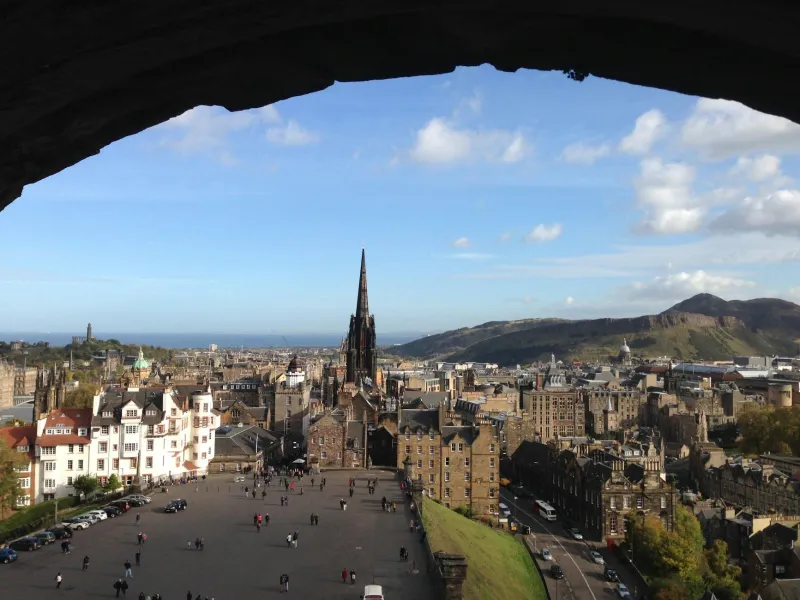
If the Tolbooth represented royal authority, the Tron Kirk embodied the commercial soul of Edinburgh. Built in the late 16th century, this distinctive church with its characteristic spire became the unofficial stock exchange of old Edinburgh. Merchants would gather beneath its walls to conduct business, settle accounts, and negotiate the deals that kept Scotland's economy flowing.
The Tron's role extended beyond mere commerce. Its bells marked the rhythms of daily life, calling citizens to worship, marking curfew, and most famously, ushering in each New Year with celebrations that continue to this day. The building's position at the intersection of the High Street and the Bridges made it a natural gathering point, and its steps became an impromptu forum where news was shared and public opinion formed.
The church's interior witnessed countless baptisms, marriages, and funerals of Edinburgh's merchant classes, creating a sacred space where commercial and spiritual life intertwined. This dual nature—part house of worship, part centre of trade—perfectly captured the pragmatic spirituality that characterised Edinburgh's approach to faith and commerce.
Echoes in Stone and Custom
Though the original Tolbooth vanished two centuries ago, its legacy lives on in Edinburgh's legal quarter. The High Court of Justiciary, which now sits in the Lawnmarket, traces its lineage directly back to the justice dispensed within the Tolbooth's walls. The traditions of Scottish law, from the unique verdict of "not proven" to the ceremonial opening of court sessions, carry forward practices that began in that vanished building.
The Tron Kirk, though much altered and no longer serving as a church, still anchors one of Edinburgh's most vibrant commercial districts. The surrounding streets retain their mercantile character, with shops and restaurants occupying spaces that have hosted trade for over four centuries. The building's basement now houses the remnants of Marlin's Wynd, a medieval street that demonstrates how Edinburgh's past literally underlies its present.
The Rhythm of Vanished Authority
Perhaps most remarkably, the daily rhythms established by these vanished civic centres continue to pulse through modern Edinburgh. The morning rush of commuters down the Royal Mile follows paths worn smooth by centuries of citizens hurrying to court sessions or market days. The evening gatherings in nearby pubs echo the informal discussions that once spilled out from official proceedings in the Tolbooth.
Even Edinburgh's famous Hogmanay celebrations trace their roots to the Tron Kirk's bells, which for centuries marked the transition from old year to new. The crowds that now gather around the Scott Monument and along Princes Street follow traditions that began with citizens clustering around the Tron's steps, waiting for those bells to announce another year's beginning.
Living Memory in Stone
Today's Edinburgh bears witness to a profound truth about urban evolution—that buildings may vanish, but their influence endures in the patterns of daily life they create. The Tolbooth and the Tron shaped not merely the physical landscape of Edinburgh, but the social, commercial, and legal frameworks that continue to define Scotland's capital.
Walking through the Old Town today, the informed visitor can still read the ghostly outlines of these vanished civic temples in the arrangement of closes, the flow of pedestrian traffic, and the enduring traditions that make Edinburgh unique among European capitals. In losing these buildings, the city gained something equally valuable—the knowledge that true civic heritage lies not just in preserved stone, but in the living customs and daily rhythms that connect past and present in an unbroken chain of urban life.