The Crucible of Crisis
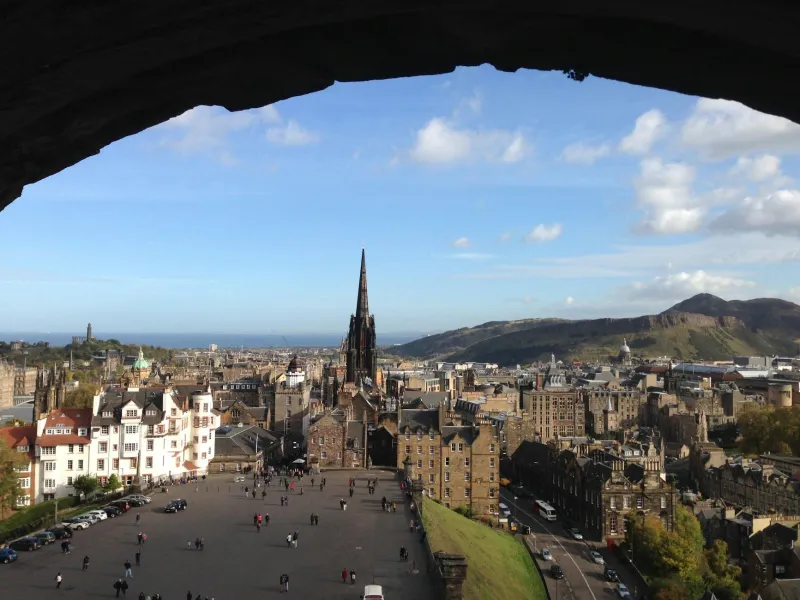
Beneath Edinburgh's polished Georgian terraces and carefully preserved medieval closes lies a far grittier narrative—one written in ash, flood water, and the stubborn determination of citizens who refused to let catastrophe claim their ancient capital. While modern visitors marvel at the seamless blend of architectural periods that defines Scotland's most celebrated city, few realise that this distinctive character emerged not from careful planning, but from a succession of disasters that repeatedly forced Edinburgh to reinvent itself.
The city's relationship with calamity stretches back centuries, each crisis leaving indelible marks upon both the physical landscape and the collective psyche of its inhabitants. Far from being mere historical footnotes, these disasters actively shaped the Edinburgh we recognise today, creating the resilient urban fabric that continues to captivate millions of visitors annually.
Medieval Pestilence and Urban Evolution
The Black Death's arrival in 1349 marked Edinburgh's first great test of survival, though it would be far from the last. As the plague swept through the cramped wynds and closes of the medieval Old Town, it exposed the deadly consequences of overcrowding within the city's defensive walls. The pestilence claimed perhaps a third of Edinburgh's population, yet from this demographic catastrophe emerged crucial urban reforms that would define the city's development for centuries to come.
Surviving records from the period reveal how the plague forced Edinburgh's authorities to confront fundamental questions about sanitation, housing density, and public health. The Canongate Tolbooth's archives contain fascinating evidence of new regulations governing waste disposal and water supply that emerged directly from plague-era necessity. These measures, initially conceived as emergency responses, gradually evolved into the systematic approach to urban planning that would later influence Edinburgh's expansion beyond the medieval core.
The plague's demographic impact also accelerated social mobility within Edinburgh's rigid guild system. As established craftsmen and merchants succumbed to disease, opportunities opened for survivors to advance through previously impermeable social hierarchies. This upheaval contributed to the entrepreneurial spirit that would later drive Edinburgh's emergence as Scotland's commercial heart.
Fire's Architectural Legacy
If plague reshaped Edinburgh's social structure, fire transformed its physical appearance. The Great Fire of 1824, which consumed much of the Old Town's southern slopes, might have spelled disaster for a less determined community. Instead, it provided Edinburgh with an unexpected opportunity for architectural renewal that complemented the Georgian New Town's planned elegance with sensitively designed replacements for medieval structures.
The fire's aftermath reveals Edinburgh's remarkable capacity for adaptive preservation. Rather than simply rebuilding what had been lost, the city's architects and planners seized the opportunity to address longstanding problems of ventilation, access, and structural integrity. The rebuilt sections of the Royal Mile demonstrate this approach, where new construction maintained the medieval street pattern whilst incorporating improved building standards and fire-prevention measures.
Architectural evidence of this fire-driven evolution remains visible throughout the Old Town. The subtle differences in stonework, window proportions, and roofline treatments tell the story of a city that learned from catastrophe without abandoning its historical identity. These variations add to Edinburgh's visual complexity, creating the layered architectural narrative that distinguishes it from more uniformly planned cities.
Flooding and Infrastructure Innovation
Edinburgh's topographical setting, whilst providing dramatic visual appeal and defensive advantages, also exposed the city to periodic flooding that tested both engineering ingenuity and community resilience. The Nor Loch, which occupied the valley between Edinburgh Castle and the emerging New Town, regularly overflowed during severe weather, creating chaos in the lower sections of the Old Town.
These flooding episodes catalysed some of Edinburgh's most significant infrastructure developments. The decision to drain the Nor Loch permanently in the early 18th century stemmed directly from flood damage and public health concerns. This massive engineering project not only eliminated a persistent hazard but also created the space for Princes Street Gardens, transforming a liability into one of Edinburgh's most cherished public amenities.
The engineering solutions developed to address Edinburgh's drainage challenges influenced urban planning across Scotland. The sophisticated system of underground channels and culverts that manages water flow through the Old Town represents centuries of accumulated knowledge gained through bitter experience of flood damage.
Community Bonds Forged in Crisis
Perhaps the most enduring legacy of Edinburgh's encounters with disaster lies not in stone and mortar, but in the patterns of community cooperation that crisis repeatedly demanded. The close-knit neighbourhoods that characterise Edinburgh's residential areas trace their origins to mutual aid networks that emerged during plague outbreaks, fire emergencies, and flood responses.
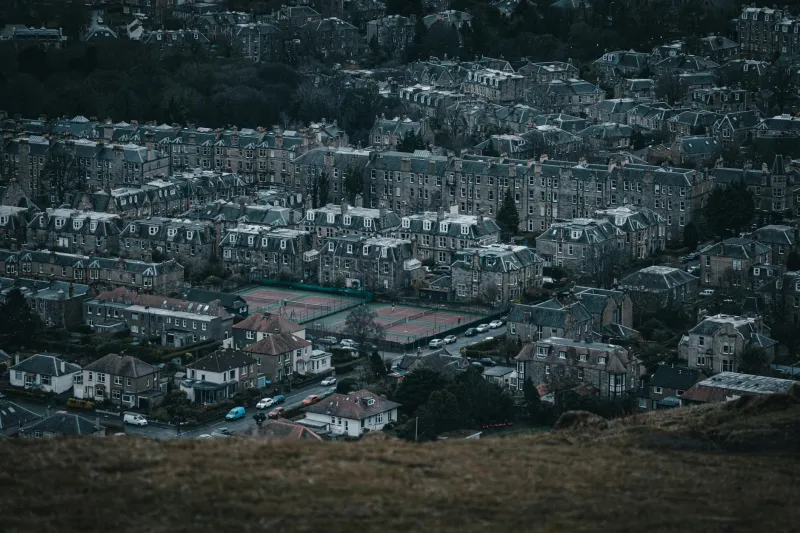
The tradition of communal responsibility for building maintenance in Edinburgh's tenements, for instance, evolved directly from fire-prevention measures implemented after devastating blazes. Similarly, the informal networks of neighbourhood support that still operate in areas like Stockbridge and Morningside reflect social structures that proved essential during times of crisis.
The Resilient Capital
Modern Edinburgh's appeal stems largely from its apparent timelessness—the sense that its ancient stones have weathered centuries unchanged. Yet this impression of permanence masks a more dynamic reality. The city visitors admire today emerged through constant adaptation to challenge, with each disaster contributing to the complex urban character that defines Scotland's capital.
Understanding this hidden history of crisis and renewal adds depth to any exploration of Edinburgh. The next time you walk through the city's historic quarters, remember that the very streets beneath your feet, the buildings that frame your view, and the community spirit that animates these ancient neighbourhoods all bear the subtle imprint of catastrophes that might have destroyed a less resilient city, but instead forged Edinburgh's distinctive character.