Where Merchants and Maidservants Mingled: The Social Tapestry of Edinburgh's Working Wynds
Whilst tourists flock to the celebrated closes branching from Edinburgh's Royal Mile, the city's true social history lies hidden within dozens of lesser-known wynds and backlands that once pulsed with the rhythms of working life. These narrow passages, many now lost to development or reduced to mere alleyways, once housed entire communities where blacksmiths hammered beside bakers, where seamstresses lived above cobblers, and where the complex hierarchies of pre-industrial Scotland played out in miniature.
The Architecture of Community
Edinburgh's wynds developed organically from the 16th century onwards, creating what historians term 'vertical villages' within the Old Town's medieval framework. Unlike the grand tenements that housed the wealthy, these working quarters were characterised by their intimate scale and mixed-use nature. Ground floors typically accommodated workshops or small businesses, whilst upper levels provided living quarters for families and apprentices.
The physical structure of these spaces fostered a unique social dynamic. Narrow staircases forced daily encounters between residents of different trades and social standings. Common wells and washing areas became centres of community life, where news travelled faster than through any formal network. Archaeological evidence from sites like Warriston's Close reveals shared cooking facilities and communal storage areas that speak to a culture of mutual dependence rarely seen in modern urban environments.
The Rhythm of Trade and Life
Each wynd developed its own economic ecosystem, often centred around a particular trade or craft. Candlemaker Row, though now gentrified, once housed dozens of chandlers whose workshops filled the narrow space with the scent of tallow and beeswax. Similarly, the lost Fleshmarket Close (different from the surviving street of that name) was home to butchers and their families, creating a self-contained community where professional and personal lives intertwined.
Historical records from the 17th and 18th centuries reveal how these micro-communities operated. The Incorporation of Hammermen, for instance, maintained detailed records of members living in Anchor Close and surrounding wynds. These documents show how apprentices lived alongside master craftsmen, how widows continued family businesses, and how trade secrets passed through generations within the confines of a few narrow streets.
Hierarchies in Miniature
Despite their modest scale, Edinburgh's working wynds maintained strict social hierarchies that mirrored the broader structures of Scottish society. Master craftsmen typically occupied the most desirable properties—those with better light or street access—whilst journeymen and apprentices lived in smaller, darker quarters. Servants employed by wealthy families often lodged in attic spaces above workshops, creating a complex vertical society within buildings that might stand no more than four storeys high.
The Incorporation records reveal fascinating details about these arrangements. In Bakehouse Close, for example, master bakers were required to provide accommodation for their apprentices, but the quality and location of these quarters were strictly regulated. Similarly, the Tailors' Incorporation maintained standards for the lodging of seamstresses and their assistants, creating a formal structure for what might appear to modern eyes as informal living arrangements.
Women's Lives in the Wynds
The role of women in these working communities deserves particular attention, as their experiences differed markedly from those of their wealthier contemporaries. Widows frequently inherited businesses and property, becoming significant figures within their local communities. The records of Fishmarket Close show how Margaret Sinclair continued her late husband's coopering business for over twenty years, employing apprentices and maintaining the family's position within the local hierarchy.
Servant women, whilst occupying lower social positions, often enjoyed greater freedom of movement and social interaction than their counterparts in grand houses. The communal nature of wynd life meant that kitchen maids and seamstresses developed networks of mutual support that extended across trade boundaries. Court records from the period frequently mention these informal networks, particularly in cases involving debt, childcare, or disputes between neighbours.
Surviving Echoes
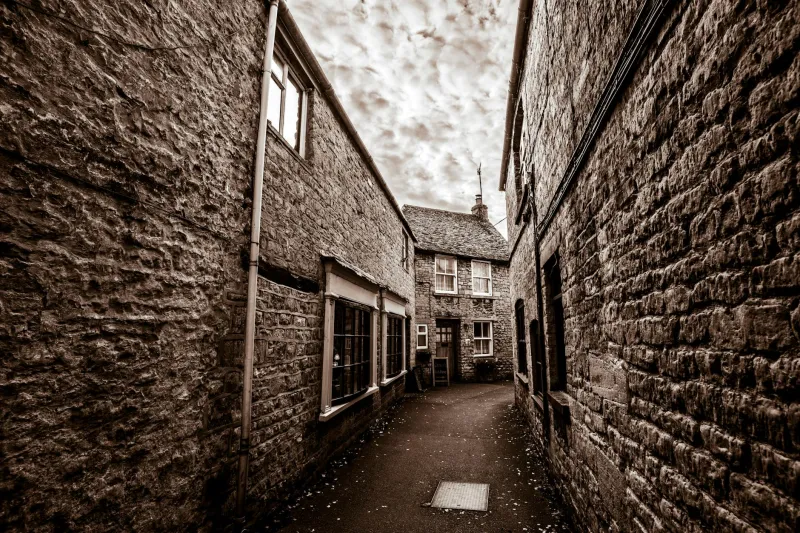
Whilst many of Edinburgh's working wynds have vanished beneath later development, careful observers can still read their stories in the city's fabric. Advocates Close retains its narrow proportions and mixed-use character, offering glimpses of how these spaces once functioned. The surviving tenements show evidence of former shop fronts, external staircases, and the small windows that indicate former workshop spaces.
More subtly, the street patterns themselves preserve the memory of these communities. The seemingly random curves and angles of the Old Town's lesser streets often follow the boundaries of former wynds, where property lines were established by centuries of negotiation between neighbours rather than formal planning.
A Living Heritage
Understanding Edinburgh's working wynds enriches our appreciation of the city's heritage beyond its famous monuments and grand architecture. These spaces remind us that Scotland's capital was built not just by kings and nobles, but by generations of ordinary people whose daily lives created the social and economic foundation upon which the city's reputation rests.
For today's visitors, seeking out the traces of these communities offers a different way of experiencing Edinburgh—one that connects the city's celebrated past with the lived experiences of the people who made it possible. In every narrow close and forgotten corner, the voices of Edinburgh's working past continue to whisper their stories to those willing to listen.