Scotland's Secret Sistine Chapel: The Hidden Masterpieces Adorning Edinburgh's Forgotten Interiors
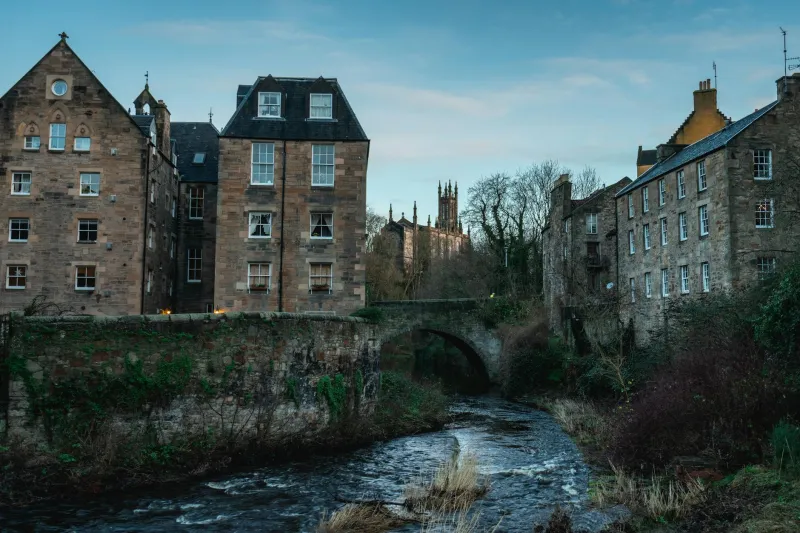
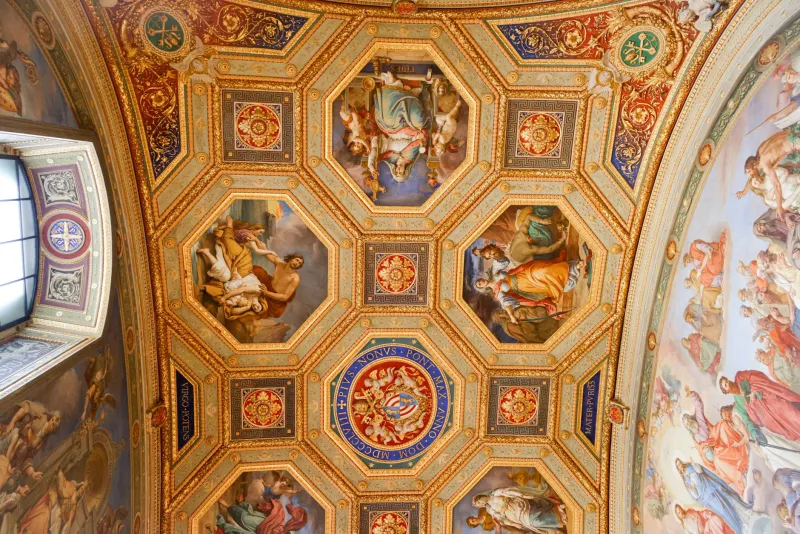
Edinburgh's reputation rests on its dramatic skyline of grey sandstone and volcanic rock, but this austere exterior conceals one of Britain's most remarkable collections of decorative art. Hidden behind unassuming doorways throughout the Old Town and beyond, extraordinary painted chambers, carved ceilings, and ornate plasterwork survive as testament to centuries of Scottish artistic achievement that few visitors ever glimpse.
Renaissance Splendour in Riddle's Court
The jewel in Edinburgh's crown of hidden interiors lies within Riddle's Court, an unassuming close off the Lawnmarket that houses what experts consider Scotland's finest surviving example of Renaissance domestic decoration. Behind a modest wooden door, visitors discover a painted chamber that would not look out of place in a Florentine palazzo.
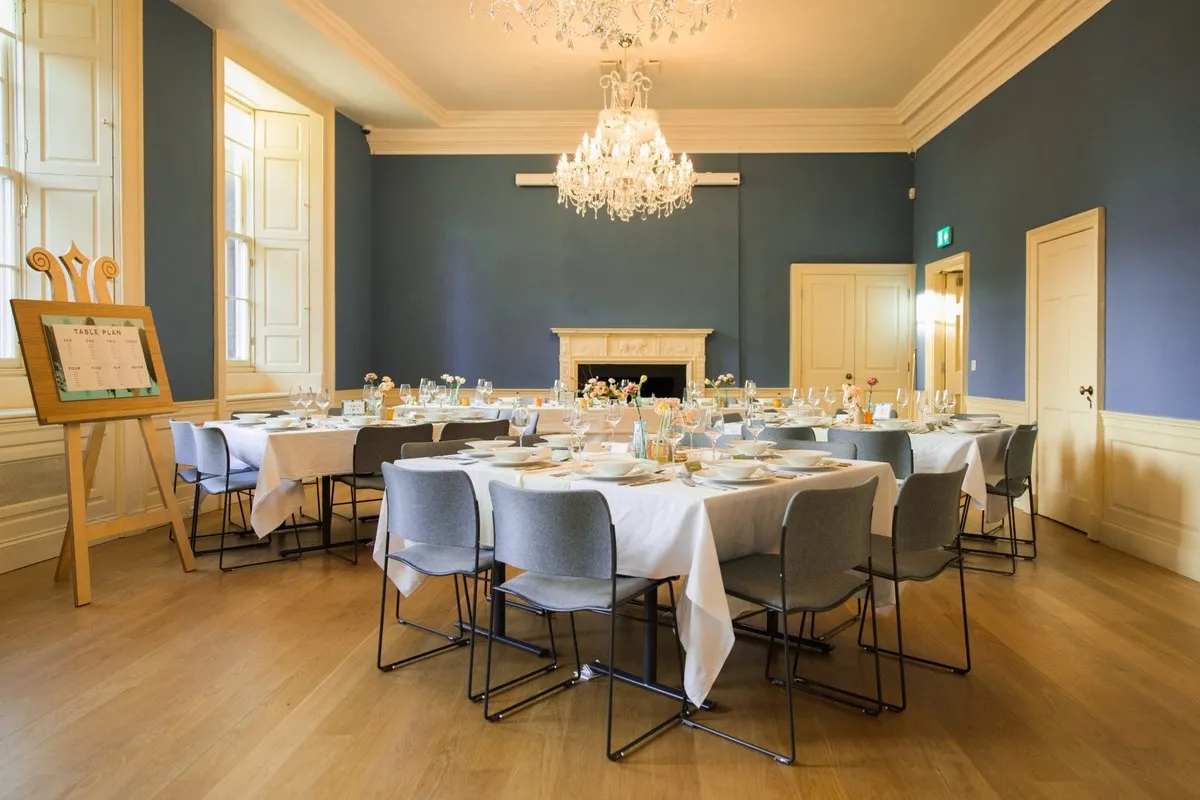 Photo: Riddle's Court, via dynamic-media-cdn.tripadvisor.com
Created around 1590 for Bailie John McMorran, one of Edinburgh's wealthiest merchants, the chamber's timber ceiling explodes with vibrant allegorical scenes depicting the Virtues and Vices, classical gods, and biblical narratives. What makes this room truly exceptional is not merely its artistic quality—though the unknown artist clearly trained in continental workshops—but its survival through four centuries of Edinburgh's tumultuous history.
The paintings reveal fascinating insights into sixteenth-century Scottish culture. Alongside traditional Christian imagery, the ceiling incorporates distinctly Scottish elements: thistles intertwined with roses (symbolising the union of Scotland and England), and heraldic devices that celebrate both local pride and international connections. The room's survival owes much to accident—sealed up during renovations in the eighteenth century, it remained hidden until restoration work in the 1930s revealed its treasures to an astonished world.
The Merchant Palaces of the Canongate
Edinburgh's Canongate, once a separate burgh from the city proper, contains perhaps the highest concentration of decorated interiors in Scotland. Here, wealthy merchants and minor nobles created domestic spaces that rivalled the royal apartments at Holyrood Palace. Moray House, built in the 1620s for Mary Dowager Countess of Home, conceals behind its restrained facade a series of rooms with painted timber ceilings that chronicle the intersection of Scottish and European artistic traditions.
The house's Great Hall features an extraordinary ceiling depicting the genealogy of Scottish kings, commissioned to legitimise the Countess's claims to ancient nobility. Each painted panel tells part of Scotland's mythical history, from the legendary Fergus I through to the contemporary Stuart monarchy. The work demonstrates how Edinburgh's elite used decorative art to construct narratives of power and legitimacy during a period of rapid social change.
Even more remarkable are the private chambers, where intimate painted scenes reveal the domestic concerns of Scotland's aristocracy. One room features a ceiling devoted entirely to the seasons, with each quarter depicting the agricultural and social activities appropriate to different times of year—a reminder that even Edinburgh's grandest families remained closely connected to the rhythms of rural life.
Hidden Treasures in Everyday Tenements
Perhaps most surprising are the decorated interiors that survive within Edinburgh's ordinary tenement buildings. During the seventeenth and eighteenth centuries, even middle-class households invested heavily in decorative schemes that transformed modest flats into showcases of cultural sophistication. Many of these painted rooms remained hidden until modern conservation work began revealing their secrets.
In the Grassmarket area, restoration of a seemingly unremarkable sixteenth-century tenement uncovered a painted chamber that had been concealed behind false walls for over two centuries. The room's ceiling features an intricate pattern of intertwined roses and thistles surrounding a central panel depicting King Solomon receiving the Queen of Sheba—a popular subject that allowed Protestant households to display biblical knowledge while celebrating royal authority.
Similar discoveries occur regularly throughout Edinburgh's Old Town. The renovation of a former merchant's house in the Cowgate revealed painted biblical scenes that had been whitewashed during the Victorian era, when such decoration was considered old-fashioned. The painstaking process of uncovering and conserving these hidden artworks provides ongoing insights into the domestic culture of historic Edinburgh.
Sacred Spaces and Their Secular Rivals
Edinburgh's kirks contain some of Scotland's most spectacular decorative schemes, though many suffered during periods of religious iconoclasm. The Thistle Chapel in St Giles' Cathedral, though dating only from the 1910s, demonstrates the continuation of Scottish decorative traditions into the modern era. Its elaborate carved stalls and painted heraldic ceiling consciously echo the great medieval and Renaissance interiors that once adorned the city's religious buildings.
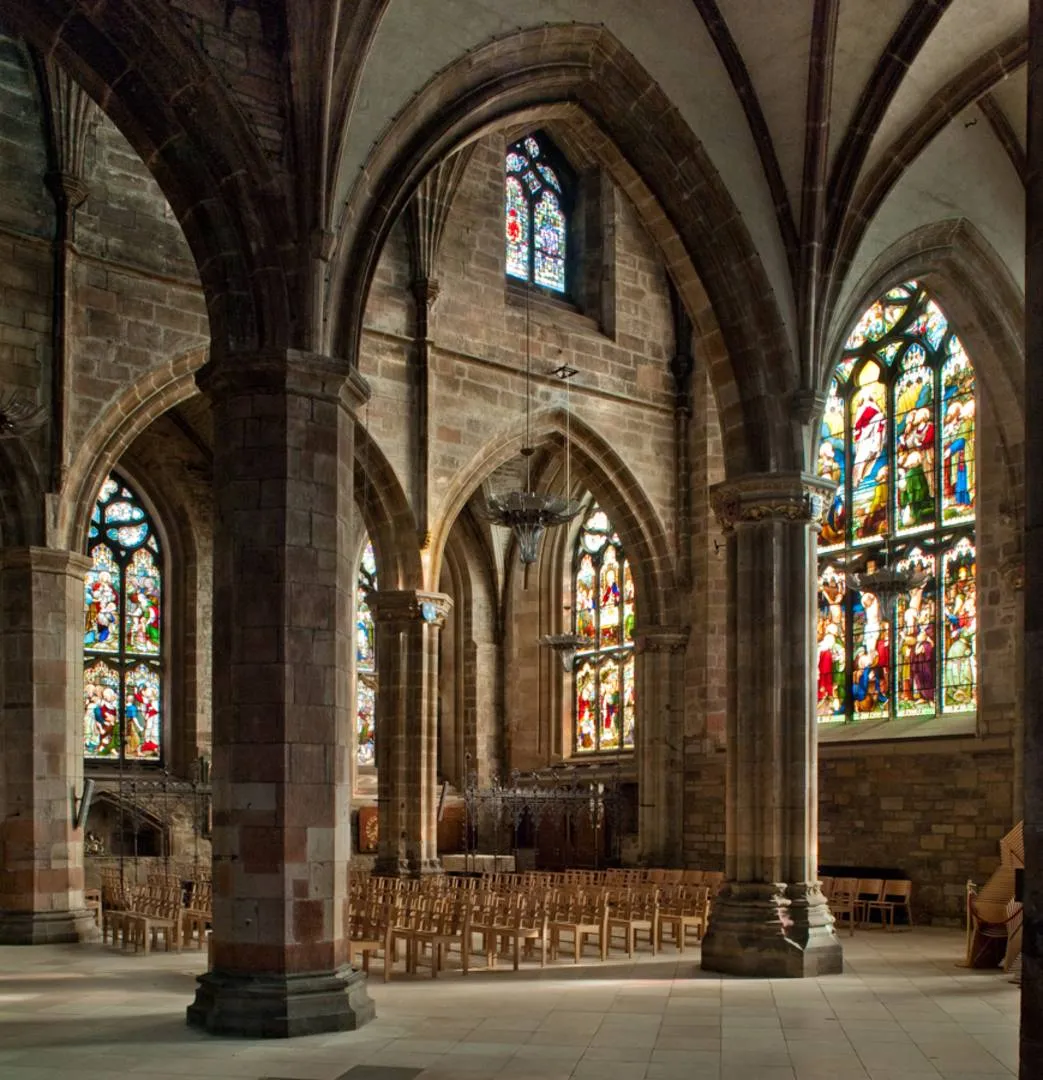 Photo: St Giles' Cathedral, via media.edinburgh.org
More authentic survivals can be found in unexpected places. The former Magdalen Chapel, now part of the Scottish Reformation Society, preserves Scotland's only pre-Reformation stained glass alongside painted armorial bearings that chronicle the complex relationships between Edinburgh's merchant guilds and religious authorities. These decorations survived the Reformation partly because they celebrated secular as well as sacred themes.
Conservation and Access Today
The challenge of preserving Edinburgh's hidden decorative heritage grows more urgent each year. Many painted interiors survive in buildings that remain in private hands, making conservation dependent on the goodwill and resources of individual owners. The Edinburgh World Heritage Trust works tirelessly to identify and protect these treasures, but the scale of the task remains daunting.
Fortunately, several exceptional interiors are now accessible to the public. The National Trust for Scotland offers guided tours of Gladstone's Land, where restored seventeenth-century painted ceilings provide visitors with authentic glimpses of Edinburgh's mercantile golden age. Similarly, the Royal Commission on the Ancient and Historical Monuments of Scotland maintains detailed photographic records of decorated interiors throughout the city, ensuring that even those lost to development or decay remain documented for future generations.
A Living Artistic Legacy
Edinburgh's hidden decorative interiors represent more than mere historical curiosities—they demonstrate the city's role as a crucial link between Scottish and European artistic traditions. The craftsmen who created these works drew inspiration from pattern books circulated throughout Protestant Europe, adapting continental models to Scottish tastes and circumstances. In doing so, they created a distinctly Scottish decorative vocabulary that influenced artistic development throughout the British Isles.
Today, as Edinburgh continues to evolve, these hidden masterpieces serve as reminders of the cultural sophistication that has always characterised Scotland's capital. Behind the city's famously restrained exterior, artistic treasures await discovery by those curious enough to venture beyond the obvious tourist attractions into the secret chambers where Edinburgh's true artistic soul resides.