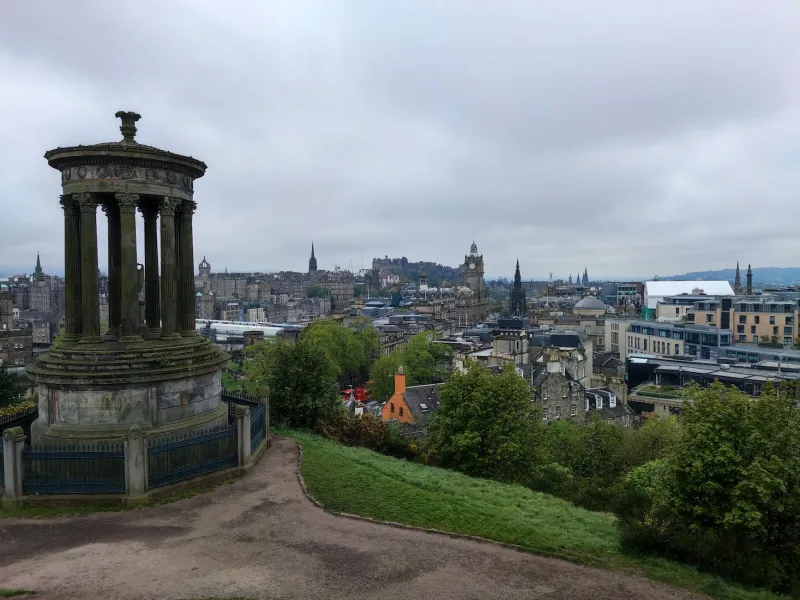
Long before railways compressed the journey from London to Edinburgh into hours rather than days, Scotland's ancient capital served as the crucial waystation for every traveller entering or leaving the kingdom. The Royal Mile, that famous stretch from Edinburgh Castle to Holyrood Palace, functioned not merely as a ceremonial thoroughfare but as the backbone of a hospitality industry that housed kings and commoners, rebels and merchants, all under the same slate roofs.
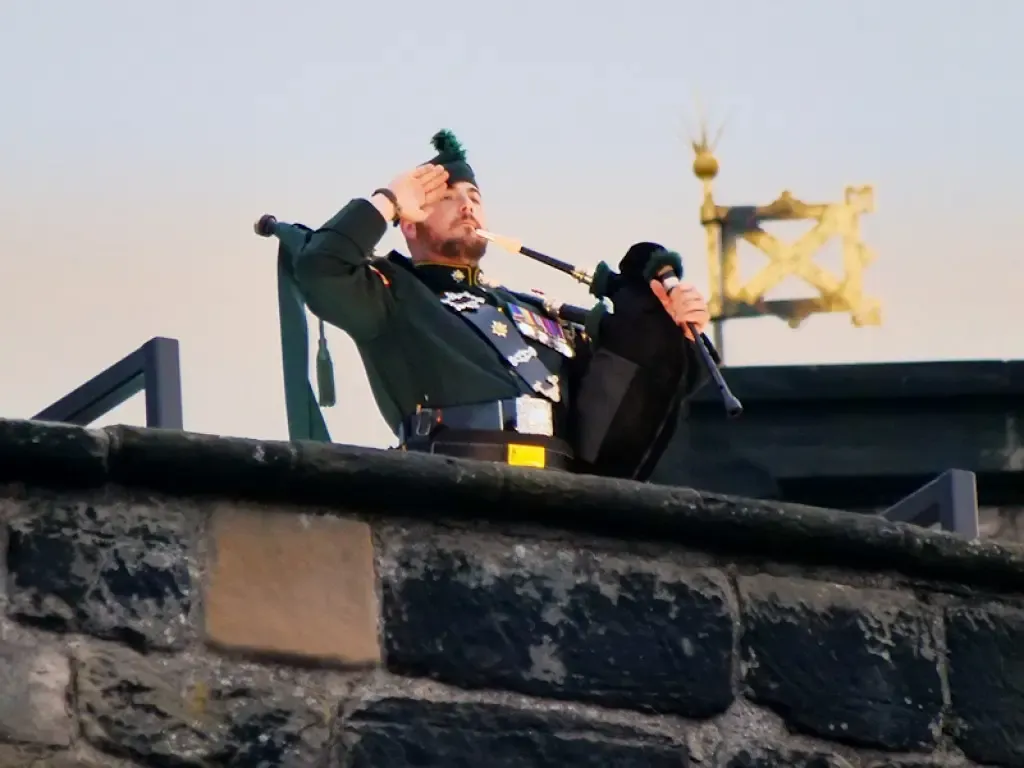 Photo: Edinburgh Castle, via edinburghcastle.uk
The great coaching inns of Edinburgh were far more than simple lodging houses—they were the beating heart of Scottish political and commercial life, where news from across Europe arrived with the post coaches and where the fate of the nation was often decided over shared tankards of ale.
The White Horse: Where Princes Plotted
At the foot of the Canongate, where the Royal Mile meets the approaches to Holyrood Palace, stood the White Horse Inn, perhaps the most politically significant hostelry in Scottish history. Built in the early 16th century, this rambling establishment served as the unofficial headquarters for those seeking audiences with the Stuart monarchs whilst providing accommodation for the steady stream of courtiers, diplomats, and petitioners who made Edinburgh their temporary home.
The White Horse earned its place in history during the Jacobite period, when it became a gathering point for Highland chiefs and their retinues travelling to Edinburgh for clan business. The inn's Great Hall could accommodate over two hundred diners, whilst its numerous private chambers provided discrete meeting spaces for political discussions that might prove treasonous if overheard. Prince Charles Edward Stuart himself is recorded as having dined there during his brief occupation of Edinburgh in 1745, using the inn's private dining room to hold council with his Highland supporters.
The building's architecture reflected its prestigious clientele—a four-storey stone structure with elaborate carved doorways and mullioned windows that proclaimed the wealth and status of its patrons. The central courtyard could accommodate dozens of coaches simultaneously, whilst the extensive stable complex housed over a hundred horses. The inn's location made it the natural choice for those conducting business at Holyrood, yet its distance from the Castle provided a degree of independence from royal oversight that made it attractive to those whose loyalty to the crown might be questioned.
The Black Bull: Commerce and Conversation
Further up the Royal Mile, near the intersection with the Bridges, the Black Bull Inn served a different but equally important function in Edinburgh's social hierarchy. Established in the 17th century, it catered primarily to merchants and professional men whose business brought them to Scotland's capital from across the British Isles and continental Europe.
The Black Bull's reputation rested on its role as an information exchange—a place where commercial intelligence was gathered, shared, and acted upon. The inn maintained an extensive correspondence with similar establishments across Scotland and northern England, creating an informal network that could relay news of market conditions, political developments, and travel conditions faster than any official postal service.
The inn's public rooms were carefully designed to facilitate these exchanges. The Merchant's Parlour, with its massive oak table and carved chairs, hosted regular gatherings of Edinburgh's trading community, whilst the smaller Committee Room provided space for more private negotiations. The inn's proprietors maintained detailed records of grain prices, livestock values, and commodity movements that made the Black Bull an essential resource for anyone engaged in Scottish commerce.
Visitors to the Black Bull included some of the most influential figures of the Scottish Enlightenment. David Hume was a regular patron, using the inn's quiet corners to conduct philosophical discussions with visiting scholars. Adam Smith dined there frequently during his time in Edinburgh, and several passages in 'The Wealth of Nations' are thought to have been inspired by conversations overheard in the inn's common room.
The Golden Fleece: Haven for Highland Travellers
The Golden Fleece, located in the heart of the Old Town near St Giles Cathedral, specialised in serving travellers from the Scottish Highlands and Islands. This focus made it a unique institution—a place where Gaelic was spoken as commonly as English and where Highland customs were observed alongside Lowland traditions.
The inn's proprietors understood the specific needs of Highland travellers, many of whom arrived in Edinburgh unfamiliar with urban customs and suspicious of Lowland ways. The Golden Fleece provided not just accommodation but cultural translation, helping Highland chiefs navigate the complexities of Edinburgh society whilst maintaining their dignity and traditions.
The inn's Great Chamber was decorated with Highland artifacts—tartan hangings, claymores, and clan badges—that made visiting Highlanders feel welcome whilst educating Lowland guests about Highland culture. The establishment maintained its own piper, who played during evening meals and provided entertainment that reminded Highland guests of home.
During the post-Culloden period, when Highland culture faced systematic suppression, the Golden Fleece served as an unofficial embassy for Highland Scotland. Its private rooms hosted meetings where clan leaders discussed strategies for preserving their traditions, whilst its public spaces provided opportunities for cultural exchange that helped prevent the complete isolation of Highland and Lowland Scotland.
The Architectural Legacy of Hospitality
The coaching inns of the Royal Mile were architectural marvels that reflected both their practical function and their social importance. These buildings needed to accommodate large numbers of people whilst providing the privacy and security that distinguished travellers demanded. The result was a distinctive architectural style that combined the defensive features of Scottish tower houses with the commercial requirements of urban hospitality.
Most inns were built around central courtyards that provided secure parking for coaches whilst creating a sense of enclosure and protection. The ground floors typically housed stables, storage areas, and public rooms, whilst the upper floors contained private chambers of varying sizes and luxury. The most prestigious inns featured elaborate carved stonework around their entrances, heraldic displays that proclaimed their royal connections, and large windows that demonstrated their owners' wealth and status.
The internal arrangements of these inns reflected the social hierarchies of their time. The finest chambers, located on the principal floor and featuring private fireplaces and glazed windows, were reserved for nobility and wealthy merchants. Lesser travellers occupied smaller rooms on upper floors, whilst servants and those of limited means shared dormitory-style accommodation in the attics.
Surviving Echoes on Today's Royal Mile
Whilst none of Edinburgh's great coaching inns survive in their original form, careful observers can still identify their former locations and trace their influence on the modern cityscape. The Canongate area, where the White Horse once stood, retains several buildings that incorporate masonry from the original inn, whilst the street pattern around the site still reflects the coach routes that once converged there.
The building that now houses Deacon's House Café on the Royal Mile occupies part of the site of the Black Bull Inn. The structure's thick stone walls and vaulted cellars date from the inn period, whilst recent renovations have revealed sections of the original courtyard paving. The café's interior design consciously evokes its coaching inn heritage, with exposed beams and stone walls that help visitors imagine the building's former life.
Several closes leading off the Royal Mile preserve the names of former inns—White Horse Close being the most obvious example. These narrow passages once provided access to inn courtyards and stables, and their current configuration still reflects their original function as service routes for the hospitality trade.
The Social Revolution of Scottish Hospitality
The coaching inns of Edinburgh's Royal Mile represented more than mere commercial enterprises—they were institutions that helped forge Scottish national identity during a crucial period in the nation's history. By bringing together Highlanders and Lowlanders, Scots and English, merchants and nobles, these establishments created opportunities for cultural exchange that might not have occurred elsewhere.
The decline of the coaching inn coincided with the arrival of the railway age, which transformed travel from a communal experience into an individual one. The great inns, with their shared meals and common rooms, had fostered a particular kind of social interaction that the railway hotel could never replicate. When the last coaches departed from the Royal Mile in the 1850s, they took with them not just a mode of transport but an entire way of life that had helped define what it meant to be Scottish.
For today's heritage-conscious visitor, understanding the role of these vanished inns provides crucial context for appreciating the Royal Mile's continuing significance. This famous street wasn't simply a route between castle and palace—it was Scotland's main street, where the nation's business was conducted and its character formed in the hospitable embrace of establishments that welcomed all who came in peace.