Five Sacred Stones: The Edinburgh Churches That Chronicle Scotland's Turbulent Soul Better Than Any History Book
Whilst visitors queue for glimpses of St Giles' Cathedral, Edinburgh's lesser-known parish churches offer far more intimate encounters with Scottish history. These five remarkable kirks, each within easy walking distance of the city centre, contain within their walls the complete story of Scotland's spiritual, political, and social evolution from medieval times to the modern era. More importantly, they remain working churches where history lives on in active congregations rather than museum displays.
1. Canongate Kirk: Where Scotland's Story Converges
Location: Canongate, Royal Mile
Founded: 1691
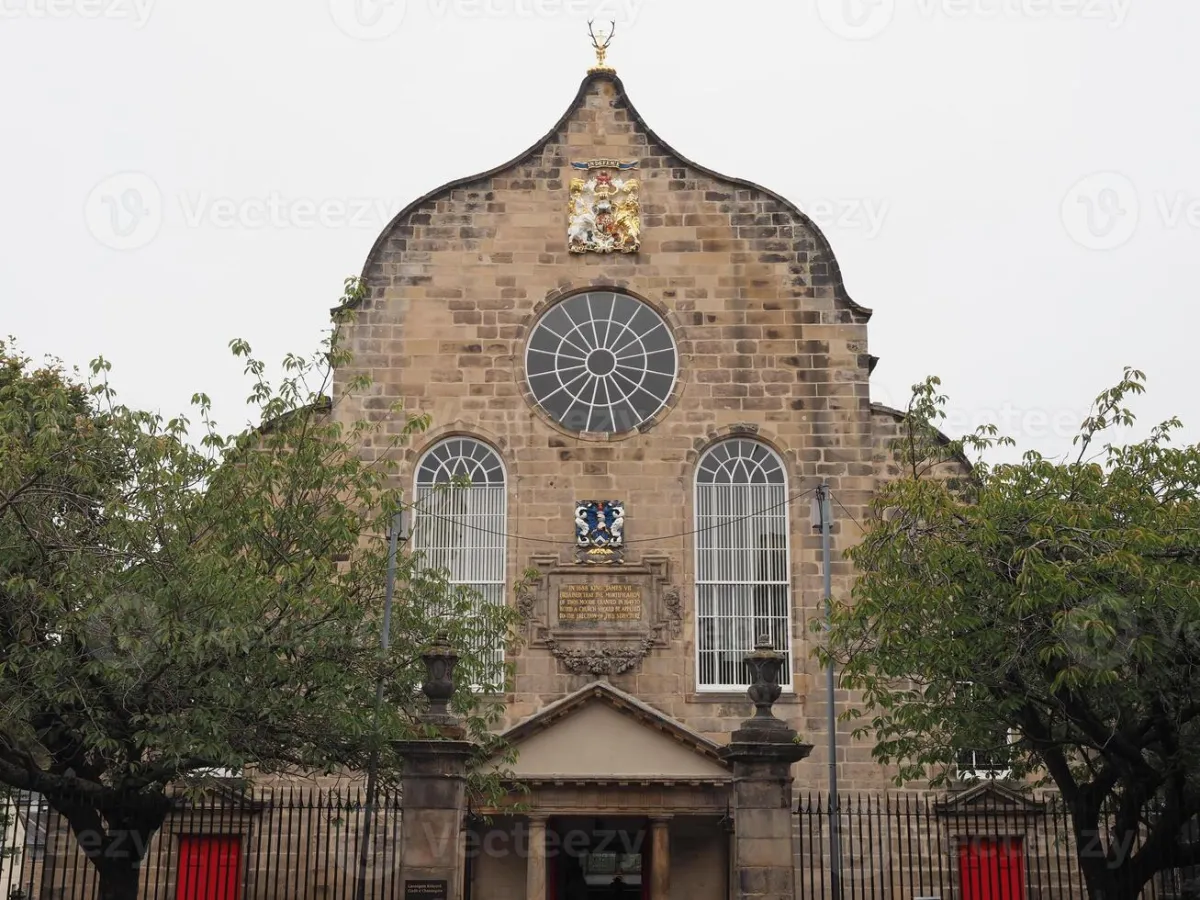 Photo: Canongate Kirk, via static.vecteezy.com
Canongate Kirk stands as perhaps Scotland's most historically significant parish church outside St Giles', yet most visitors walk past its understated facade without a second glance. This proves a considerable mistake, for within these walls lie buried some of Scotland's most influential figures, whilst the church's own story encapsulates the nation's religious and political struggles.
Built to serve the separate burgh of Canongate after its residents were expelled from Holyrood Abbey's chapel, the kirk immediately became the focal point for Edinburgh's most dramatic historical moments. The church's graveyard reads like a who's who of Scottish achievement: economist Adam Smith rests here alongside poet Robert Fergusson, whose grave was later marked by Robert Burns himself. The philosopher David Hume lies beneath a simple monument that belies his revolutionary impact on European thought.
Yet Canongate Kirk's true historical significance lies in its role as witness to Scotland's constitutional development. The church served as the meeting place for Edinburgh's burgesses during crucial moments in Scottish history, including debates over the Act of Union in 1707. Its pulpit has echoed with sermons that shaped Scottish Presbyterian theology, whilst its pews have accommodated everyone from destitute weavers to members of the royal household.
Today's visitors should seek out the church's remarkable collection of trade guild banners, which chronicle the evolution of Edinburgh's commercial life, and the memorial windows that commemorate the congregation's losses during two world wars—reminders that this ancient building continues to serve a living community.
2. Greyfriars Kirk: Scotland's Covenant with History
Location: Greyfriars Place, Old Town
Founded: 1620
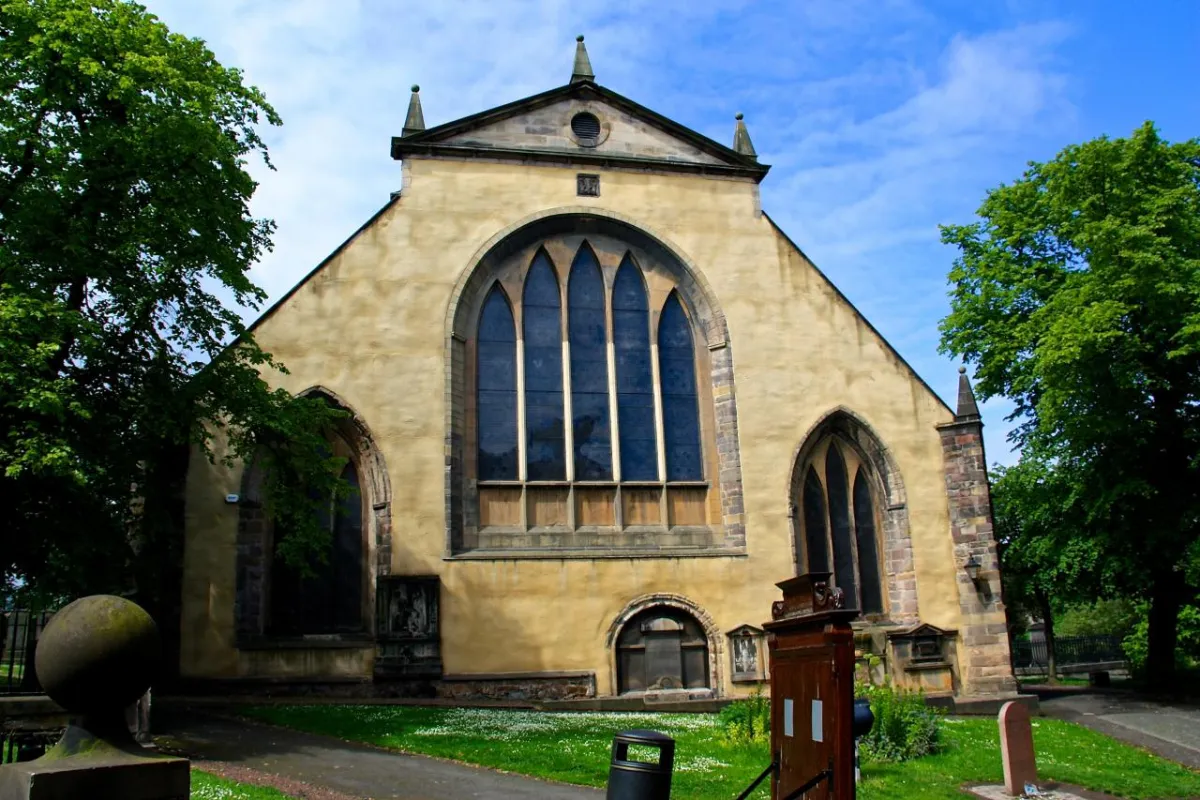 Photo: Greyfriars Kirk, via www.religiana.com
No church in Scotland carries greater historical weight than Greyfriars Kirk, yet its significance extends far beyond the famous story of Greyfriars Bobby. This is where Scotland's National Covenant was signed in 1638, marking the beginning of the religious and political upheaval that would reshape British history for generations.
The kirk itself tells the story of Scottish Presbyterianism through its architecture and furnishings. Built on the site of a medieval Franciscan friary, the church deliberately rejected Catholic ornamentation in favour of austere Protestant simplicity. Yet this apparent plainness conceals sophisticated theological statements: the layout emphasises the centrality of preaching over ritual, whilst the lack of religious imagery reflects Presbyterian beliefs about the proper worship of God.
Greyfriars' kirkyard contains Scotland's most poignant collection of Covenanter memorials, marking the graves of those who died for their religious convictions during the 'Killing Times' of the late seventeenth century. The Martyrs' Monument commemorates over 18,000 Covenanters who perished for their faith, whilst individual gravestones tell personal stories of sacrifice and conviction that bring Scotland's religious wars into human focus.
Modern visitors should not miss the kirk's remarkable collection of mort safes—iron cages placed over graves to deter body-snatchers during Edinburgh's notorious era of anatomical research. These grim relics remind us that even sacred ground was not immune to the city's darker commercial enterprises.
3. St Cuthbert's Parish Church: Edinburgh's Ancient Heart
Location: Lothian Road, West End
Founded: 12th century (current building 1894)
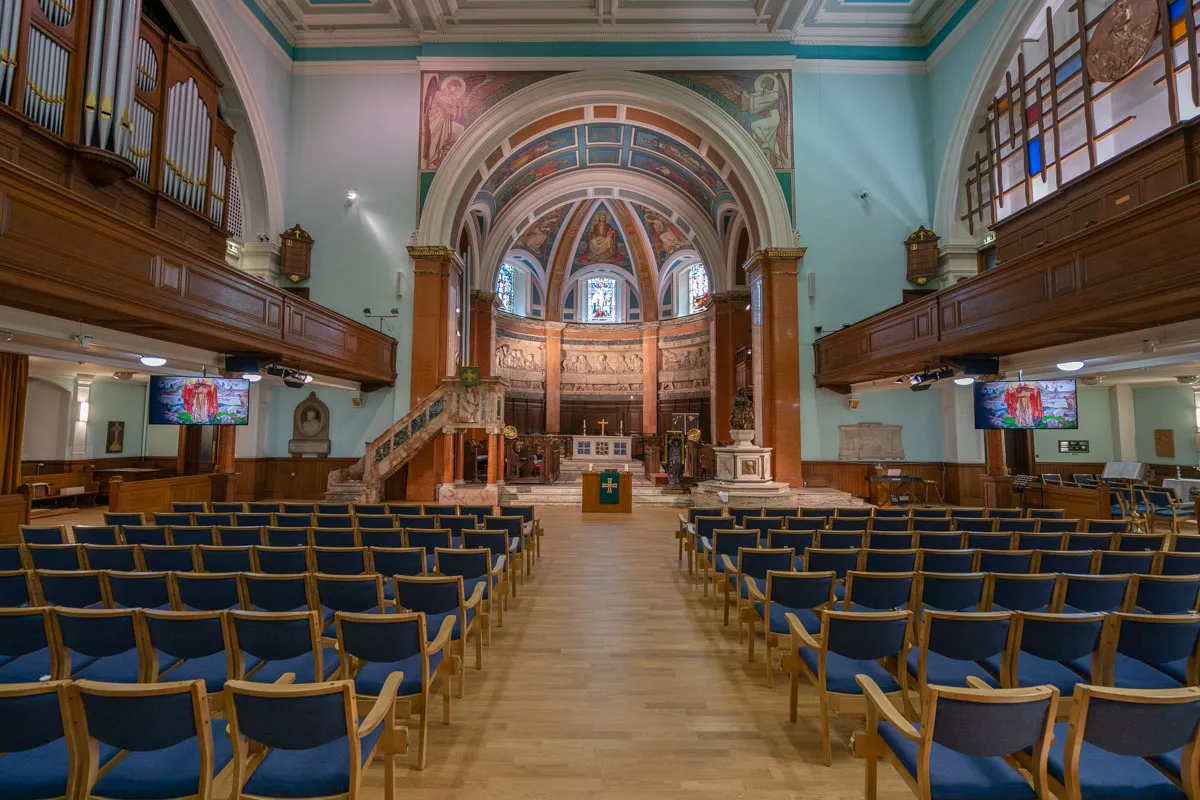 Photo: St Cuthbert's Parish Church, via i0.wp.com
St Cuthbert's claims the distinction of being Edinburgh's oldest parish church, with records of Christian worship on this site dating back to the twelfth century. Though the current Victorian Gothic building replaced earlier structures, the church's graveyard and historical associations provide unparalleled insights into Edinburgh's development from medieval burgh to modern capital.
The church's location, at the foot of Edinburgh Castle's rock, made it the natural burial place for the city's elite throughout the medieval and early modern periods. The kirkyard contains some of Scotland's finest examples of seventeenth and eighteenth-century funerary sculpture, including elaborate baroque monuments that rival anything found in European cemeteries. These memorials chronicle the rise of Edinburgh's merchant classes and professional families, whose wealth and influence shaped the city's golden age.
Particularly significant is the church's role in Edinburgh's ecclesiastical politics. St Cuthbert's served as the mother church for much of medieval Edinburgh, with authority over numerous daughter churches throughout the region. The church's records, dating back to the sixteenth century, provide invaluable documentation of births, marriages, and deaths among Edinburgh's population, offering researchers unique insights into the demographic and social history of Scotland's capital.
The current Victorian building, whilst historically recent, represents Edinburgh's nineteenth-century religious revival and demonstrates how Scottish church architecture adapted continental Gothic models to Presbyterian requirements. The church's interior, with its emphasis on preaching and congregational singing, reflects the continuing influence of Reformation principles on Scottish worship.
4. Tron Kirk: Commerce and Conscience in the Old Town
Location: High Street, Royal Mile
Founded: 1647
The Tron Kirk occupies a unique position in Edinburgh's religious landscape, both geographically and historically. Built to accommodate overflow from St Giles' after the Reformation created larger congregations, the church became the focal point for Edinburgh's merchant community and the scene of crucial developments in Scottish Presbyterian worship.
The church's name derives from the public weighing beam (tron) that stood nearby, highlighting its close connection to Edinburgh's commercial life. This proximity to trade made the Tron Kirk the natural spiritual home for Edinburgh's merchant guilds, whose members filled its pews and funded its elaborate furnishings. The church's history thus intertwines the development of Scottish Protestantism with the rise of Edinburgh's commercial classes.
Architecturally, the Tron Kirk represents a crucial stage in the evolution of Scottish church design. Built during the Commonwealth period, when English Puritan influences temporarily dominated Scottish religious life, the church combines Scottish Presbyterian traditions with English meeting-house principles. The result is a building that embodies the complex religious politics of seventeenth-century Scotland.
The church's most famous historical moment came in 1693, when a fire that began in the building spread throughout the Old Town, destroying numerous historic structures. The subsequent rebuilding campaign transformed large areas of medieval Edinburgh and marked the beginning of the city's Georgian expansion. Today, the church houses the Old Town Information Centre, ensuring that its educational mission continues in secular form.
5. St Andrew's and St George's West: New Town's Spiritual Showcase
Location: George Street, New Town
Founded: 1784
St Andrew's and St George's West represents Edinburgh's Georgian religious architecture at its most accomplished, but more importantly, it chronicles the social and theological developments that transformed Scottish Presbyterianism during the eighteenth and nineteenth centuries. Built as the principal church for Edinburgh's New Town, it attracted the city's most influential families and became a showcase for progressive Presbyterian theology.
The church's neoclassical design, with its imposing portico and elegant spire, makes a bold statement about Edinburgh's cultural aspirations during the Scottish Enlightenment. Unlike the austere medieval kirks of the Old Town, this building embraces architectural beauty as an expression of divine glory, reflecting changing attitudes within Scottish Presbyterianism towards art and aesthetics.
Historically, St Andrew's and St George's West played a crucial role in the major schisms that divided Scottish Presbyterianism during the nineteenth century. The church's congregation included many leaders of the Free Church movement, which broke away from the established Church of Scotland in 1843 over questions of patronage and religious independence. The church building itself became a symbol of these theological debates, with its architectural grandeur representing different things to different factions within Scottish Protestantism.
Today, the church serves as the headquarters of the Church of Scotland's World Mission department, maintaining its tradition of engagement with global issues. Its regular concert series and community programmes demonstrate how historic churches can remain vital parts of urban life whilst preserving their architectural and spiritual heritage.
Planning Your Sacred Journey
These five churches can easily be visited in a single day's walking tour of Edinburgh, though each deserves more than a cursory glance. Most are open to visitors during daylight hours, though it's worth checking service times to avoid disrupting worship. The churches welcome respectful visitors and many offer guided tours or information leaflets that provide additional historical context.
Together, these sacred stones tell Scotland's story more completely than any museum exhibition or history book. They remind us that Edinburgh's past lives on not merely in monuments and memorials, but in active communities of faith that continue to shape the city's spiritual and cultural life. In an age of rapid change, these churches provide continuity with Scotland's deepest traditions whilst adapting to serve contemporary needs—perhaps the most Scottish characteristic of all.