Edinburgh's Unsung Heroes: Five Statues That Tell Scotland's Most Compelling Stories
Amidst the constant stream of visitors posing beside Edinburgh's most photographed monuments, a collection of extraordinary statues stands quietly overlooked. These bronze and stone figures commemorate individuals whose contributions to Scottish society were nothing short of revolutionary, yet whose stories remain largely untold to the casual observer.
Dr James Young Simpson: Pioneer Against Pain
Location: Princes Street Gardens, near the Scott Monument
 Photo: Dr James Young Simpson, via i.ytimg.com
The bronze figure of Dr James Young Simpson, erected in 1877, depicts a man whose medical innovations fundamentally changed human experience of pain. Simpson, Professor of Midwifery at Edinburgh University, introduced chloroform as an anaesthetic, revolutionising surgery and childbirth. Yet the statue tells only part of his remarkable story.
Simpson's early experiments with anaesthetics nearly killed him—he tested chloroform on himself and his assistants in his Queen Street home, awakening to find himself sprawled beneath his dining table. The medical establishment initially resisted his innovations, with religious leaders condemning anaesthesia during childbirth as contrary to divine will. Simpson's persistence ultimately prevailed when Queen Victoria herself used chloroform during the birth of Prince Leopold in 1853.
The statue's positioning, overshadowed by the towering Scott Monument, seems almost intentional—a reflection of how medical pioneers often labour in the shadows of more celebrated figures, despite their profound impact on human welfare.
Thomas Guthrie: Champion of Scotland's Forgotten Children
Location: Princes Street Gardens, West End
 Photo: Thomas Guthrie, via montenegro-experte.de
Thomas Guthrie's statue, unveiled in 1910, honours a man who transformed the lives of Edinburgh's most vulnerable children. A Free Church minister, Guthrie established the first 'Ragged Schools' in Scotland, providing education and meals for destitute children who would otherwise have faced lives of poverty and crime.
Guthrie's revolutionary approach recognised that hungry children cannot learn effectively. His schools provided not just basic literacy and numeracy, but practical skills and, crucially, regular meals. The impact was immediate and profound—crime rates among Edinburgh's youth plummeted, whilst literacy rates soared.
The statue depicts Guthrie surrounded by children, a bronze testament to his belief that society's strength lay in nurturing its most disadvantaged members. His work influenced education policy throughout Britain and established principles that underpin modern social services.
Allan Ramsay: The Forgotten Father of Scottish Literature
Location: Princes Street, outside the National Gallery
The statue of Allan Ramsay, erected in 1865, commemorates a figure whose influence on Scottish culture was immense yet whose name is barely recognised today. Ramsay, an 18th-century poet and bookseller, established Britain's first circulating library and played a crucial role in preserving Scottish literary tradition.
Ramsay's poetry collections, particularly 'The Gentle Shepherd', helped establish Scots as a legitimate literary language at a time when English cultural dominance threatened to erase Scottish identity entirely. His Luckenbooths bookshop became a gathering place for Edinburgh's intellectual elite, fostering the conditions that would later flourish into the Scottish Enlightenment.
Perhaps most remarkably, Ramsay fought fierce battles with Edinburgh's religious authorities who sought to close his library, arguing that novel-reading corrupted public morals. His victory established important precedents for intellectual freedom that benefited generations of Scottish writers and thinkers.
David Livingstone: Explorer and Humanitarian
Location: East Princes Street Gardens
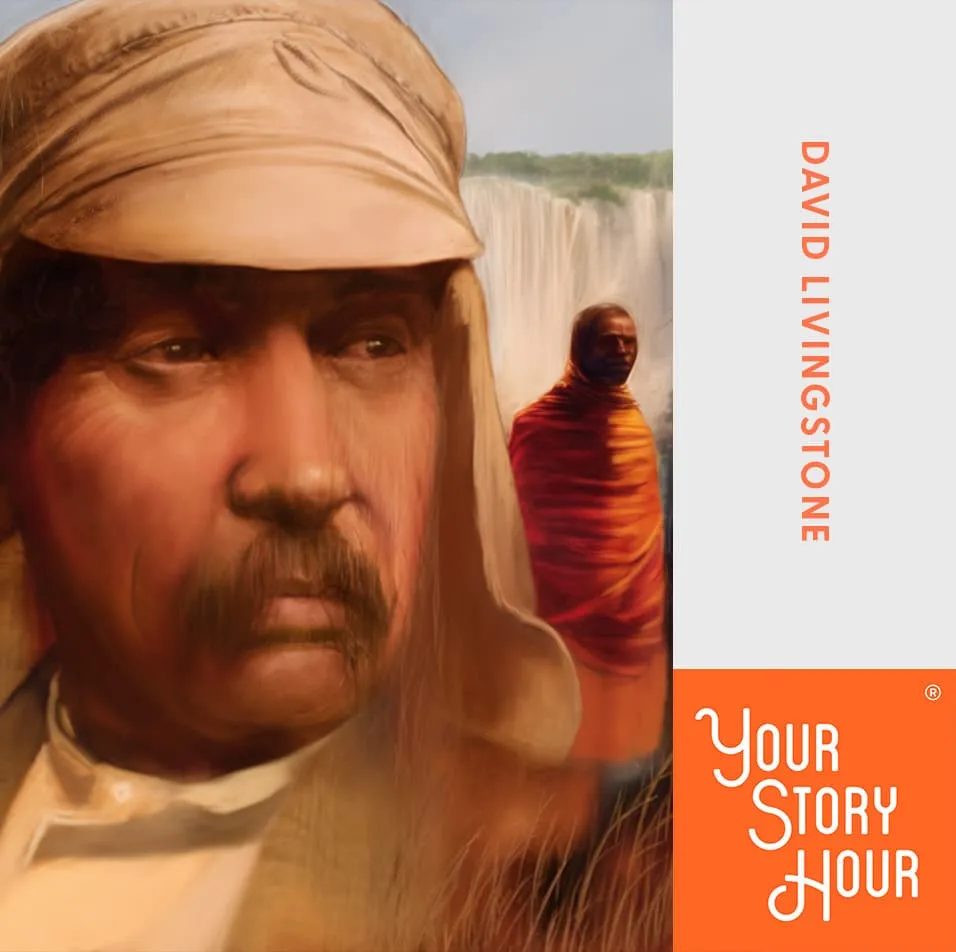 Photo: David Livingstone, via cdn2.treefortsystems.com
Whilst Livingstone's fame as an African explorer is well-established, the statue erected in 1876 tells a more complex story of a man driven by humanitarian convictions rather than mere adventure. Born in Blantyre, Livingstone studied medicine in Glasgow before embarking on missionary work that would reshape European understanding of Africa.
Livingstone's expeditions were motivated primarily by his opposition to the slave trade. He believed that establishing legitimate commerce and Christianity in Africa would undermine the economic foundations of slavery. His detailed maps and reports opened previously unknown regions to European knowledge, but his primary concern remained the welfare of African peoples.
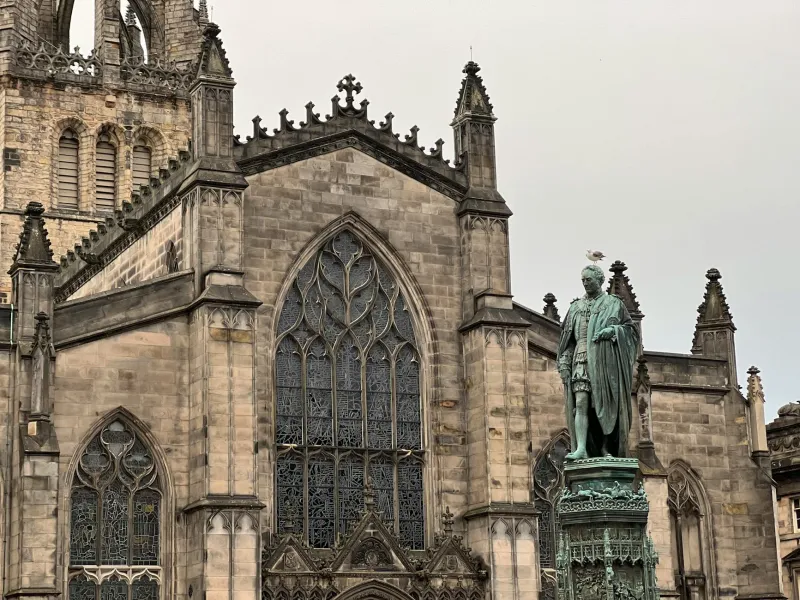
The statue's inscription emphasises Livingstone's role as a liberator rather than a conqueror, reflecting Victorian Scotland's complex relationship with empire and humanitarian ideals. His influence on subsequent African exploration and the eventual abolition of slavery was profound and lasting.
John Knox: Revolutionary Reformer
Location: New College, Mound Place
The statue of John Knox, unveiled in 1906, depicts perhaps the most controversial figure in Scottish religious history. Knox's role in establishing Presbyterianism fundamentally altered Scottish society, creating institutions and attitudes that persist today.
Knox's revolutionary approach extended beyond theology to education and social organisation. His 'Book of Discipline' outlined plans for universal education funded by redistributed church wealth—a radical concept that wouldn't be fully implemented for centuries. His emphasis on literacy as essential for religious understanding helped create Scotland's reputation for educational excellence.
The statue's stern expression captures Knox's uncompromising nature, which brought him into conflict with monarchs, fellow reformers, and Catholic authorities alike. His influence on Scottish national identity was immense, establishing principles of religious independence that shaped Scotland's relationship with England for generations.
The Stories Stone Remembers
These five statues represent more than mere commemorative art—they embody Scotland's capacity for producing individuals who challenged established order and improved human welfare. Their stories remind us that Edinburgh's greatest treasures aren't always its most visible monuments, but the ideas and principles that shaped a nation's character.
Next time you walk through Edinburgh's streets, pause beside these overlooked figures. Their bronze and stone forms guard stories that illuminate Scotland's role in advancing human knowledge, compassion, and freedom—legacies that continue to influence our world today.